# POC-200 Series

<figure><img src="https://3062424488-files.gitbook.io/~/files/v0/b/gitbook-x-prod.appspot.com/o/spaces%2FlLHqs7kbNoKOFTwGOfH6%2Fuploads%2Fgit-blob-18e37c145cbc872aabe7371c119da60f832bfcc5%2F9fc202fd7bdfe999a0a49dc3c20e7d22b5d9ce8e53e967776b371409d8c2f823.png?alt=media" alt="" height="304" width="468"><figcaption></figcaption></figure>

### Manual, Drivers, Datasheet <a href="#poc-200-drivers-and-manual" id="poc-200-drivers-and-manual"></a>

As a certified OnLogic solution, all detailed product documentation, including user manuals, technical specifications, regulatory information, and software downloads, is available directly on the manufacturer support site linked below.

{% embed url="<https://www.neousys-tech.com/en/product/product-lines/industrial-computers/ultra-compact/poc-200>" %}

### How to Enable Auto Power On <a href="#how-to-enable-auto-power-on" id="how-to-enable-auto-power-on"></a>

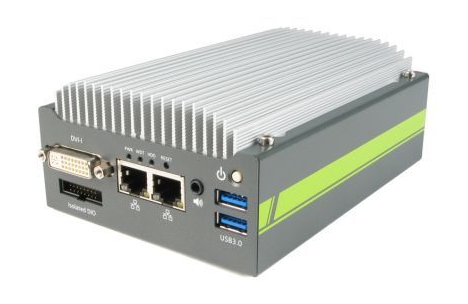
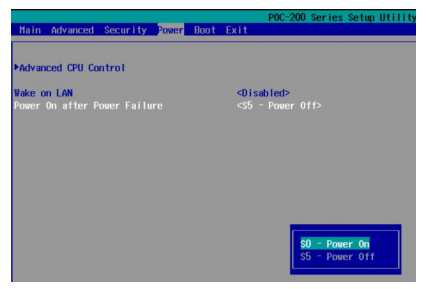
The POC-200 can be configured to turn on automatically. This is useful for power outage recovery or if the unit is mounted in a hard to reach location. You can enable Auto Power On by following the steps listed below:

1. Power on the system and immediately press the F2 key a few times to access the BIOS.
2. Navigate over to the Power tab.
3. Change the option \[Power On after Power Failure] to \[S0 – Power on].
4. Navigate to the Exit tab and choose “Save Changes and Reset”

<figure><img src="https://3062424488-files.gitbook.io/~/files/v0/b/gitbook-x-prod.appspot.com/o/spaces%2FlLHqs7kbNoKOFTwGOfH6%2Fuploads%2Fgit-blob-265d65c8cf6edbbecab49438a918ba74d98bc2ec%2F08088dc65207ae6107573b6b81f8950cd903ecde6d1a3944e55b1e61611ec88b.png?alt=media" alt="" height="289" width="426"><figcaption></figcaption></figure>

### POC-200 Hardware Troubleshooting <a href="#poc-200-hardware-troubleshooting" id="poc-200-hardware-troubleshooting"></a>

Opening the POC-200 does not void the manufacturer’s warranty. However, some precautions are necessary to avoid damaging the unit:

* Perform this disassembly in an area free of static discharge
* Before beginning, touch a grounded metal surface to discharge your body of static electricity

#### Opening the POC-200 Case <a href="#opening-the-poc-200-case" id="opening-the-poc-200-case"></a>

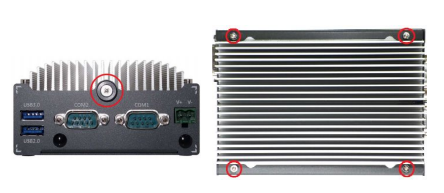
1. Unscrew 4x hex bolts on the top of the heatsink.
2. Unscrew 1x hex bolt from the side.

<figure><img src="https://3062424488-files.gitbook.io/~/files/v0/b/gitbook-x-prod.appspot.com/o/spaces%2FlLHqs7kbNoKOFTwGOfH6%2Fuploads%2Fgit-blob-0272008fa99e8e0e624ea45b3e2fb38fa508b010%2F7094557bfe52424f405ee9ebacce84115ff8d6b5aef6b6af1122feec113dc624.png?alt=media" alt="" height="193" width="444"><figcaption></figcaption></figure>

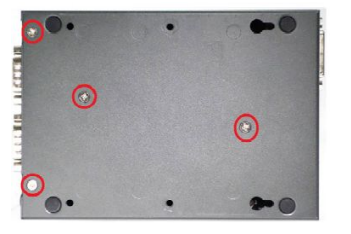
3. Unscrew four M3 F-head screws on the bottom side.

<figure><img src="https://3062424488-files.gitbook.io/~/files/v0/b/gitbook-x-prod.appspot.com/o/spaces%2FlLHqs7kbNoKOFTwGOfH6%2Fuploads%2Fgit-blob-40fe14da11cd911fa92f1825d1334e7942c7d2f7%2F1f975ba39b9723e95c2c0beeafbda9854855f4c6c7c5d78bcf5e56372615758a.png?alt=media" alt="" height="234" width="351"><figcaption></figcaption></figure>

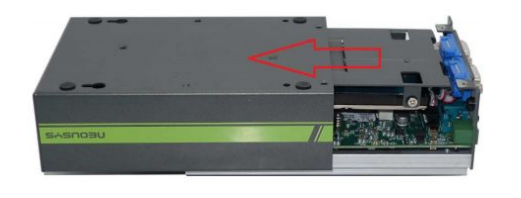
4. Slide the bottom cover off.

<figure><img src="https://3062424488-files.gitbook.io/~/files/v0/b/gitbook-x-prod.appspot.com/o/spaces%2FlLHqs7kbNoKOFTwGOfH6%2Fuploads%2Fgit-blob-db1c4bb9b900be5579621df2b267e49454f69899%2F72f20c82176d1e6892d79a128cdca215e0159dd26a47e945ef9f4d477daab711.png?alt=media" alt="" height="198" width="521"><figcaption></figcaption></figure>

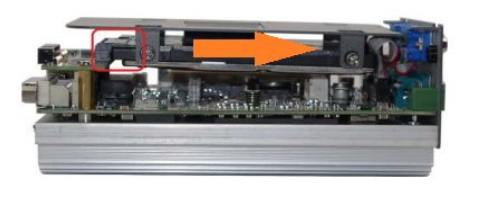
5. Pull the HDD out of its slot and remove the tray.

<figure><img src="https://3062424488-files.gitbook.io/~/files/v0/b/gitbook-x-prod.appspot.com/o/spaces%2FlLHqs7kbNoKOFTwGOfH6%2Fuploads%2Fgit-blob-5d59baf26977ab06188729a3f823ea71503f33f6%2F75606d9c721c33e2dd9cff40c29c90721a6e1e195eab86ccb14ea2172c1e8b64.png?alt=media" alt="" height="202" width="481"><figcaption></figcaption></figure>

### How to Clear CMOS <a href="#how-to-clear-cmos" id="how-to-clear-cmos"></a>

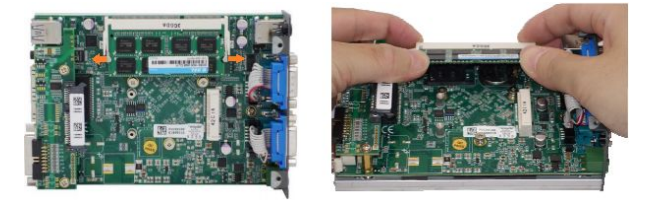
1. Remove the RAM by pressing outward on the two metal clips.
2. The module will pop up to a 45 degree angle and can be removed straight out of slot.

<figure><img src="https://3062424488-files.gitbook.io/~/files/v0/b/gitbook-x-prod.appspot.com/o/spaces%2FlLHqs7kbNoKOFTwGOfH6%2Fuploads%2Fgit-blob-0891c8aa611abe71ae7722752407ff6f655b6496%2F2199c5cfa25dea001ce8cffc848d8f606a325d2c9826f6f960c68bfa499ab914.png?alt=media" alt="" height="208" width="648"><figcaption></figcaption></figure>

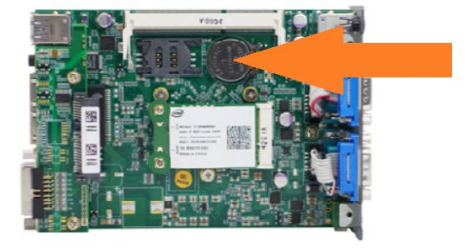
3. Locate the CMOS battery.

<figure><img src="https://3062424488-files.gitbook.io/~/files/v0/b/gitbook-x-prod.appspot.com/o/spaces%2FlLHqs7kbNoKOFTwGOfH6%2Fuploads%2Fgit-blob-c42a6ead7fdf202ae0236bc35610384319a710ca%2Fbef0c08264afc817b87ae290ce0d504ee07814dfcb5431ab748b3ef0883029ce.png?alt=media" alt="" height="248" width="469"><figcaption></figcaption></figure>

4\. Remove the CMOS battery from the holder.\
5\. Wait 5 minutes.\
6\. Reinstall the battery. The CMOS is now clear.\
7\. Follow the instructions in reverse order to reassemble the unit.