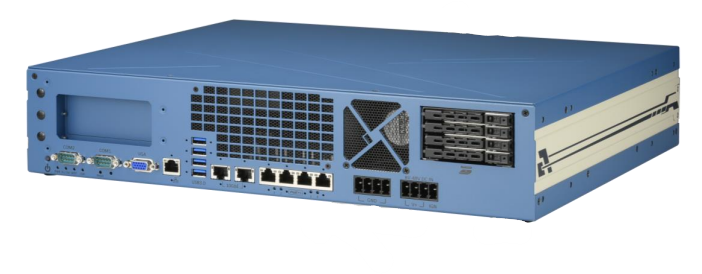
# RGS-8805GC

<figure><img src="https://3062424488-files.gitbook.io/~/files/v0/b/gitbook-x-prod.appspot.com/o/spaces%2FlLHqs7kbNoKOFTwGOfH6%2Fuploads%2F8eyrjyLSHhdqUBt3QtB2%2FScreenshot%202025-11-13%20113310.png?alt=media&#x26;token=ad2dfa36-f09e-4f42-8775-466ec30136a9" alt=""><figcaption></figcaption></figure>

### Documents and Downloads <a href="#documents-and-downloads" id="documents-and-downloads"></a>

[Spec Sheet](https://neousys-web-bucket.s3.us-west-1.amazonaws.com/datasheet/rgs-8805gc-industrial-rugged-hpc-server.pdf)

[RGS-8805 Introduction Sheet](https://static.onlogic.com/resources/support/SupportSiteContent/Neousys_RGS-8805GC_Quick_Introduction_Guide_v1.0_Draft_20220725%201.pdf)

[Product Manual (BIOS and Hardware)](https://static.onlogic.com/resources/support/SupportSiteContent/RGS-8805GC_Series_User_Manual_v.1.0_Draft_Onlogic.pdf)

Drivers

[Windows 10 Drivers](https://static.onlogic.com/resources/drivers/RGS-8805GC/RGS-8805GC_Win10.zip)

### Opening the Chassis <a href="#opening-the-chassis" id="opening-the-chassis"></a>

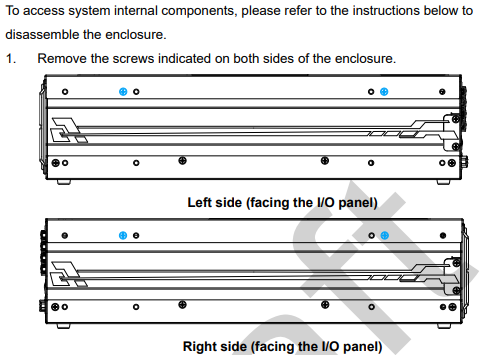
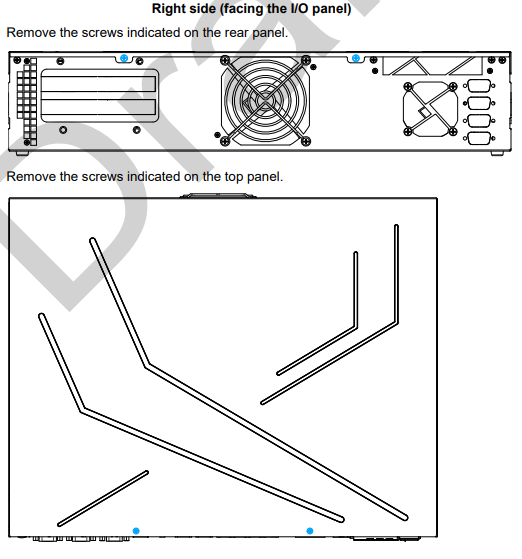
Remove 8 Black screws from Chassis to free the Cover. The cover will lift off and you will have access to the inside of the unit’s chassis.

<figure><img src="https://3062424488-files.gitbook.io/~/files/v0/b/gitbook-x-prod.appspot.com/o/spaces%2FlLHqs7kbNoKOFTwGOfH6%2Fuploads%2FGV81kuJ5LsGrmDoOW4FQ%2Fimage.png?alt=media&#x26;token=4b3cc375-d35b-4126-a80e-977c74bea984" alt=""><figcaption></figcaption></figure>

<figure><img src="https://3062424488-files.gitbook.io/~/files/v0/b/gitbook-x-prod.appspot.com/o/spaces%2FlLHqs7kbNoKOFTwGOfH6%2Fuploads%2FIbEqQRmoIE4ADGi8ljPU%2Fimage.png?alt=media&#x26;token=d024c880-125f-4945-ae59-4e502e5e4741" alt=""><figcaption></figcaption></figure>

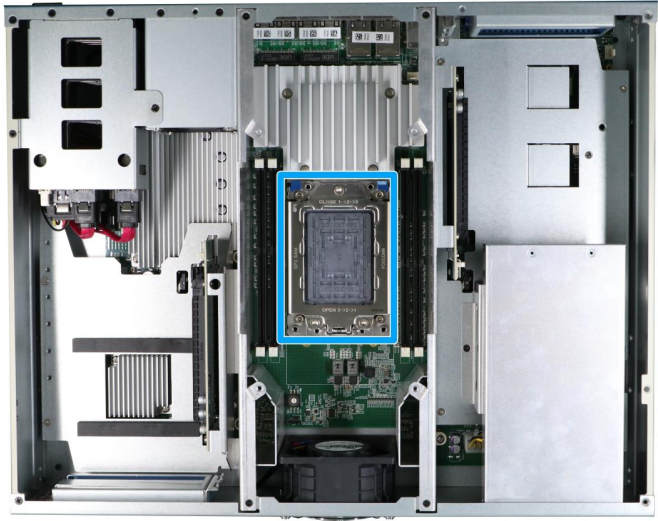
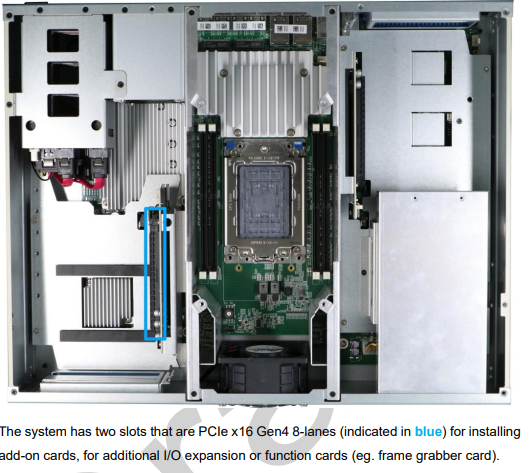
With the lid removed you should see the below layout

<figure><img src="https://3062424488-files.gitbook.io/~/files/v0/b/gitbook-x-prod.appspot.com/o/spaces%2FlLHqs7kbNoKOFTwGOfH6%2Fuploads%2FsfQ8MJ7m5rgCPxW1W4Z0%2Fimage.png?alt=media&#x26;token=b883d4f9-41f8-42f4-804b-5ba40f6c9c26" alt=""><figcaption></figcaption></figure>

Further disassembly steps are located in the product manual, starting on page 42.

### GPU Installation <a href="#gpu-installation" id="gpu-installation"></a>

<figure><img src="https://3062424488-files.gitbook.io/~/files/v0/b/gitbook-x-prod.appspot.com/o/spaces%2FlLHqs7kbNoKOFTwGOfH6%2Fuploads%2FpwnKnW04lkcdQFFTw1uZ%2Fimage.png?alt=media&#x26;token=92ff1d47-b3f2-41e8-87f9-97372659550d" alt=""><figcaption></figcaption></figure>

To gain access to internal components, please refer to the section [Opening the Chassis](#opening-the-chassis). Remove the punch-out panel for the PCIe card on the rear panel.

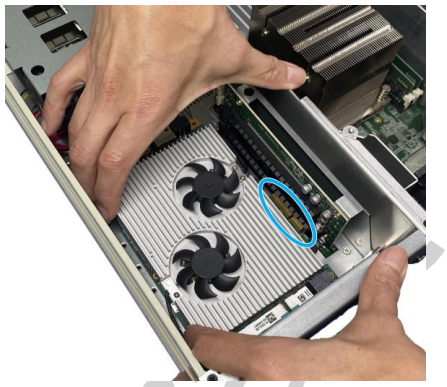
Take the PCIe card out of its box/ static bag, align and insert the goldfingers into the\
PCIe slot. There are two slots available, it is recommended to install into the bottom\
slot first.

<figure><img src="https://3062424488-files.gitbook.io/~/files/v0/b/gitbook-x-prod.appspot.com/o/spaces%2FlLHqs7kbNoKOFTwGOfH6%2Fuploads%2FbOocndQMoPxTZOdrNdFl%2Fimage.png?alt=media&#x26;token=c14a6359-00aa-49e8-8455-15ab19274f70" alt=""><figcaption></figcaption></figure>

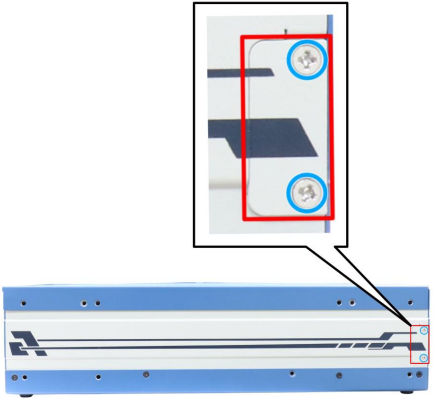
Remove the screws (indicated in blue) on the side panel, and the remove the trap\
door (indicated in red).

<figure><img src="https://3062424488-files.gitbook.io/~/files/v0/b/gitbook-x-prod.appspot.com/o/spaces%2FlLHqs7kbNoKOFTwGOfH6%2Fuploads%2FXdqQU4OjdLpnJKl7CdjS%2Fimage.png?alt=media&#x26;token=c7509a4e-9c26-4550-90e3-22ff61728e17" alt=""><figcaption></figcaption></figure>

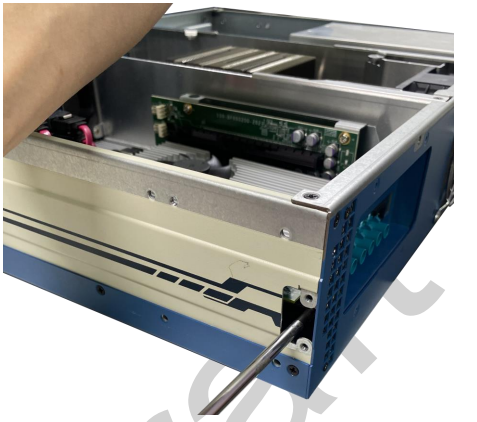
Secure the PCIe card panel with a screw through the trap door

<figure><img src="https://3062424488-files.gitbook.io/~/files/v0/b/gitbook-x-prod.appspot.com/o/spaces%2FlLHqs7kbNoKOFTwGOfH6%2Fuploads%2FBl2KmgrHGPfQr06VRpqW%2Fimage.png?alt=media&#x26;token=255b9932-8a4b-40e4-9369-bc6ce9bbc68a" alt=""><figcaption></figcaption></figure>

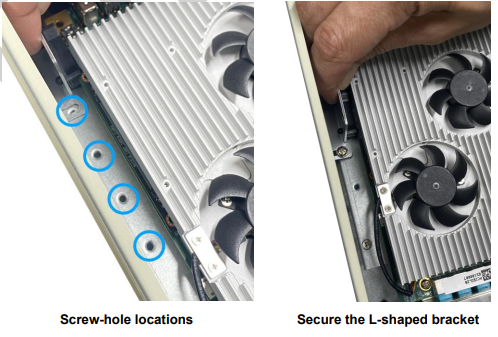
For a standard full-size PCIe card, there are L-shaped stopper brackets in the\
accessory box for securing the add-on card in place. Depending on the size of your\
add-on card, locate the appropriate screw-holes for placement. Secure two screws\
to position the stopper bracket in-place

<figure><img src="https://3062424488-files.gitbook.io/~/files/v0/b/gitbook-x-prod.appspot.com/o/spaces%2FlLHqs7kbNoKOFTwGOfH6%2Fuploads%2FdQzokei6QVLcTIxODvft%2Fimage.png?alt=media&#x26;token=2d9ca3d7-dbc4-4462-882d-a3b907f78993" alt=""><figcaption></figcaption></figure>

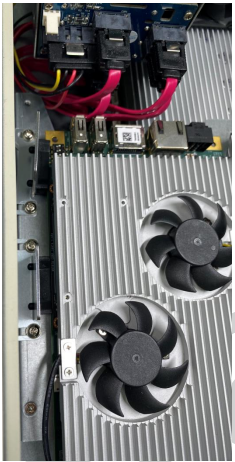
Secure at least one L-shape bracket towards the middle or mid-rear end of the PCIe\
card to complete the add-on PCIe card installation.

<figure><img src="https://3062424488-files.gitbook.io/~/files/v0/b/gitbook-x-prod.appspot.com/o/spaces%2FlLHqs7kbNoKOFTwGOfH6%2Fuploads%2FeFY58MKNzOlVY9u5AcvJ%2Fimage.png?alt=media&#x26;token=88cdb2fd-2dbd-499e-a594-500e6d36835e" alt=""><figcaption></figcaption></figure>

Reinstall the system enclosure and panel when done. If you need to install other components, please refer to respective sections.

### Component Locations <a href="#component-locations" id="component-locations"></a>

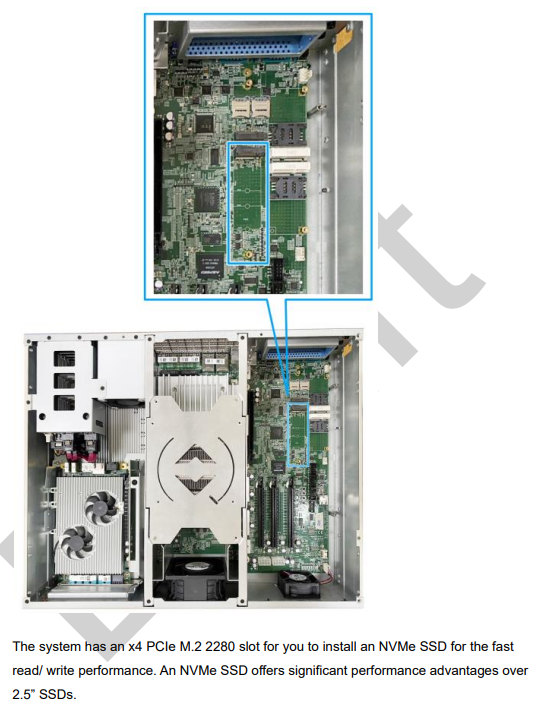
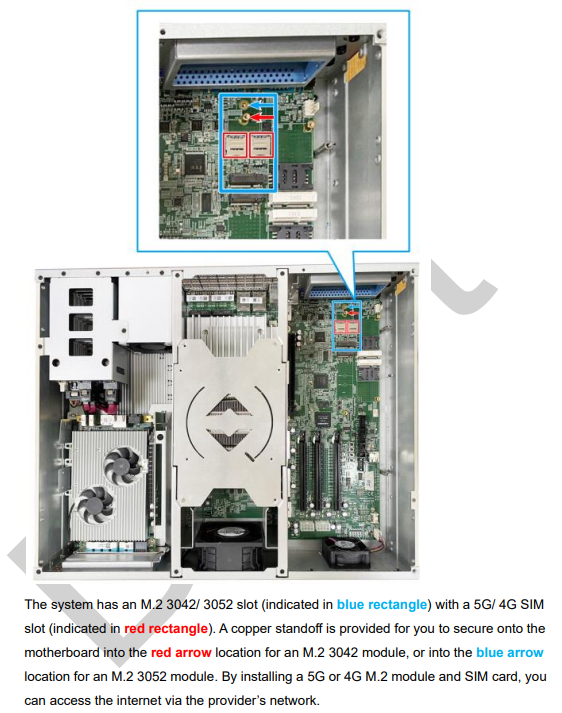
To access these slots on the board you will need to remove any PCIe card currently installed in the Full Length bay.

#### M.2 Storage

<figure><img src="https://3062424488-files.gitbook.io/~/files/v0/b/gitbook-x-prod.appspot.com/o/spaces%2FlLHqs7kbNoKOFTwGOfH6%2Fuploads%2FUx9cfLrNHMsZkAqjlEkE%2Fimage.png?alt=media&#x26;token=04478e1a-ed98-44f7-b4fb-2dff2776a1f5" alt=""><figcaption></figcaption></figure>

<figure><img src="https://3062424488-files.gitbook.io/~/files/v0/b/gitbook-x-prod.appspot.com/o/spaces%2FlLHqs7kbNoKOFTwGOfH6%2Fuploads%2FnCjcBHzDvj2pFjsV3ezZ%2Fimage.png?alt=media&#x26;token=7788681b-6b56-4b10-9b68-c434f46e7b05" alt=""><figcaption></figcaption></figure>

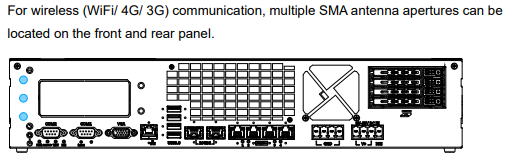
#### WIFI

<figure><img src="https://3062424488-files.gitbook.io/~/files/v0/b/gitbook-x-prod.appspot.com/o/spaces%2FlLHqs7kbNoKOFTwGOfH6%2Fuploads%2FpnvKCw8iBwZSkn2AZhTy%2Fimage.png?alt=media&#x26;token=199970d2-4f73-418b-8f17-a5e12cbee313" alt=""><figcaption></figcaption></figure>

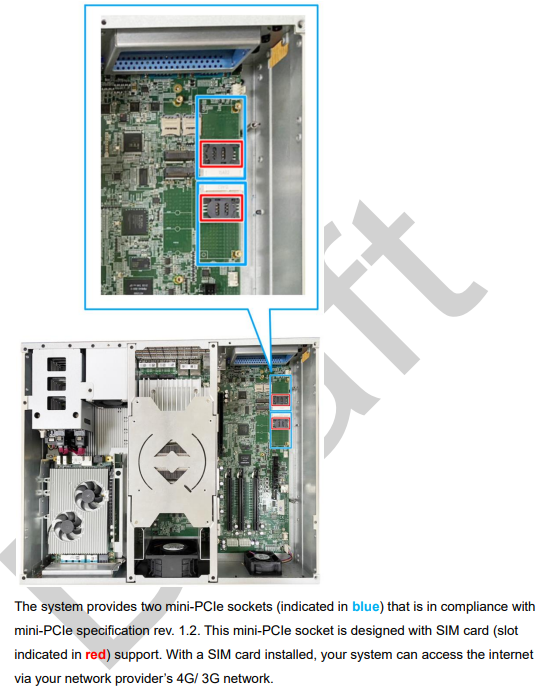
#### mPCIE

<figure><img src="https://3062424488-files.gitbook.io/~/files/v0/b/gitbook-x-prod.appspot.com/o/spaces%2FlLHqs7kbNoKOFTwGOfH6%2Fuploads%2FAYILmiwIR3beiGq86w0R%2Fimage.png?alt=media&#x26;token=ca6dfcfa-f59e-4c2e-b8d4-4cf795fa3785" alt=""><figcaption></figcaption></figure>

### Enabling Auto Power <a href="#enabling-auto-power" id="enabling-auto-power"></a>

#### Bios - Power On After Power Failure Option

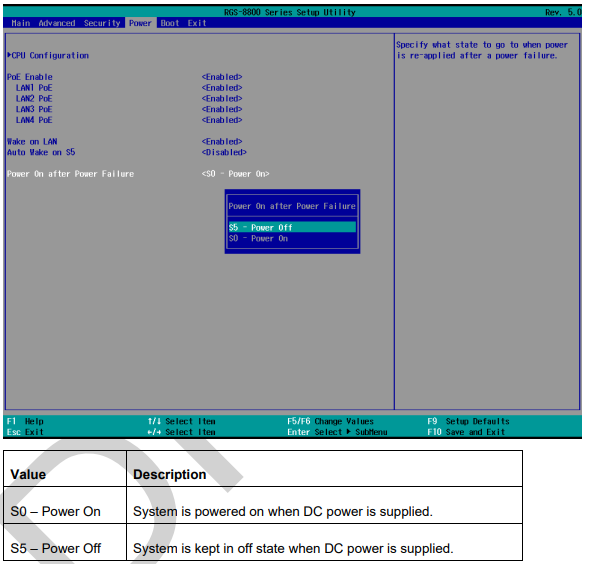
This option defines the behavior of System series when DC power is supplied.

<figure><img src="https://3062424488-files.gitbook.io/~/files/v0/b/gitbook-x-prod.appspot.com/o/spaces%2FlLHqs7kbNoKOFTwGOfH6%2Fuploads%2FLEUQMqrlWd3Gw4sVh0Lt%2Fimage.png?alt=media&#x26;token=2970dbf9-cd06-4514-a3da-d0f85d0562cf" alt=""><figcaption></figcaption></figure>

To set “Power On after Power Failure” option:

1. When system boots up, press F2 to enter BIOS setup utility.
2. Go to \[Power] > \[Power On after Power Failure].
3. Scroll down to highlight \[Power On after Power Failure], press ENTER to bring up setting options, S0 – Power On or S5 – Power Off, and press ENTER to select the setting.
4. Press F10 to “Exit Saving Changes”

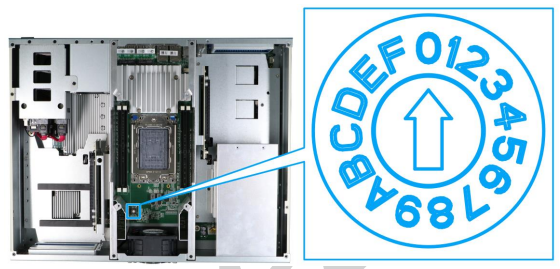
#### Hardware - Ignition Settings

In order to set auto-power on this unit you will need to turn the dial seen below to the corresponding position(Position 1).

<figure><img src="https://3062424488-files.gitbook.io/~/files/v0/b/gitbook-x-prod.appspot.com/o/spaces%2FlLHqs7kbNoKOFTwGOfH6%2Fuploads%2F4UUN7JXM2tnR3pCX8y2u%2Fimage.png?alt=media&#x26;token=3e0f0114-094e-4113-abdd-2eb18bc9d32c" alt=""><figcaption></figcaption></figure>

A full list of the ignition timings can be found in the manual, starting on page 91.

### Troubleshooting <a href="#troubleshooting" id="troubleshooting"></a>

#### Resetting the CMOS <a href="#resetting-the-cmos" id="resetting-the-cmos"></a>

<figure><img src="https://3062424488-files.gitbook.io/~/files/v0/b/gitbook-x-prod.appspot.com/o/spaces%2FlLHqs7kbNoKOFTwGOfH6%2Fuploads%2FgQZqYkle6iP3fcrolFnm%2Fimage.png?alt=media&#x26;token=976d07c4-4716-4e3e-af9e-118d5a8a053d" alt=""><figcaption></figcaption></figure>

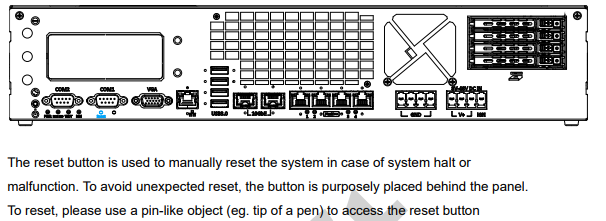
1. Disconnect the unit from all power and other peripherals
2. Hold the RESET button for 30 seconds
3. Release the button and reapply power to the unit