# Windows 11 Pro Reinstallation

Windows 11 Pro can be reinstalled using a USB flash drive and a tool from Microsoft. This guide will walk you through creating the flash drive and performing the installation. \***If you are installing Windows 11 onto a RAID array on the K800, you will want to follow the specific steps available here:**

[#id-4.31-setting-up-raid-and-installing-windows-11](https://support.onlogic.com/product-documentation/rugged-products/karbon-k800-series/k801-k802-k803-k804#id-4.31-setting-up-raid-and-installing-windows-11 "mention")

### <mark style="color:blue;">Prerequisites</mark> <a href="#prerequisites" id="prerequisites"></a>

* An 8GB or larger flash drive (USB 3.0 model recommended for speed)
* A PC running Windows 10 or 11
* The Media Creation Tool, [downloadable from here.](https://go.microsoft.com/fwlink/?linkid=2156295)

### <mark style="color:blue;">Create Flash Drive</mark> <a href="#creating-the-flash-drive" id="creating-the-flash-drive"></a>

<figure><img src="https://3062424488-files.gitbook.io/~/files/v0/b/gitbook-x-prod.appspot.com/o/spaces%2FlLHqs7kbNoKOFTwGOfH6%2Fuploads%2Fgit-blob-172297c9cc445febfbcfde2258cf9ce84d21022d%2F232b870c7d062f794ff2fa17f6c7a3c8779d86d035a7cbf7df67f5eaa29bdebb.png?alt=media" alt="" height="25" width="159"><figcaption></figcaption></figure>

* Download and run the Media Creation Tool, linked above

<figure><img src="https://3062424488-files.gitbook.io/~/files/v0/b/gitbook-x-prod.appspot.com/o/spaces%2FlLHqs7kbNoKOFTwGOfH6%2Fuploads%2Fgit-blob-e7dd8feb85fe3494f08340d31cde738a69ceec92%2F3a4830f6ae8f46df93bd6955d8ad9ee8031cc647d95614acd9f734e3260906a5.png?alt=media" alt="" width="563"><figcaption></figcaption></figure>

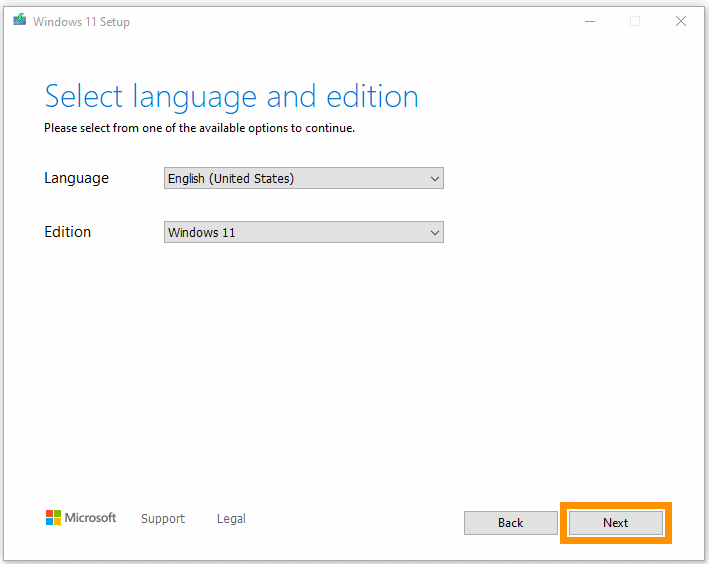
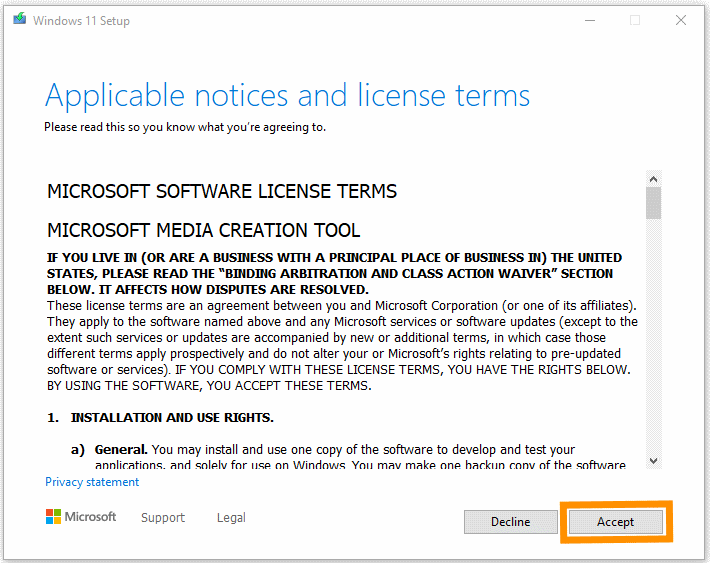
* Accept the license agreement

<figure><img src="https://3062424488-files.gitbook.io/~/files/v0/b/gitbook-x-prod.appspot.com/o/spaces%2FlLHqs7kbNoKOFTwGOfH6%2Fuploads%2Fgit-blob-bdc5f6a7eb7bef0eafe5674a367c0de672c3b099%2Fef84a0d3bbd77714767c19dba8c421cf13aa68990c547735791ad4c37d60ea4e.png?alt=media" alt="" width="563"><figcaption></figcaption></figure>

* Click Next

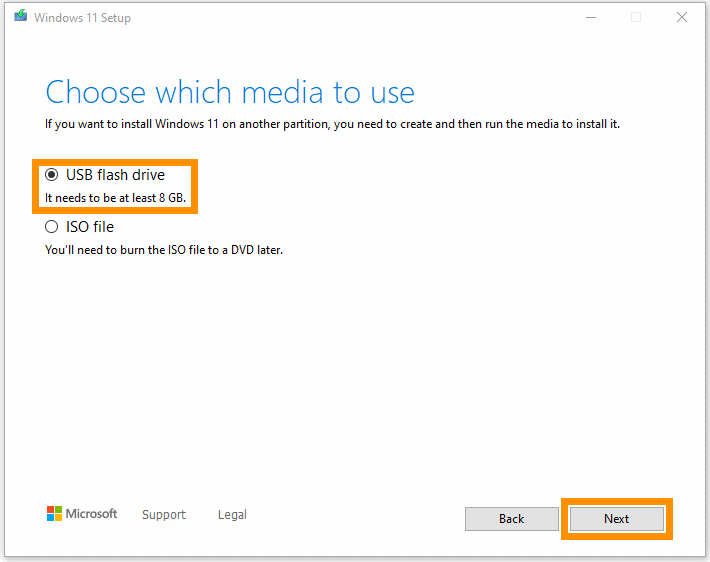
<figure><img src="https://3062424488-files.gitbook.io/~/files/v0/b/gitbook-x-prod.appspot.com/o/spaces%2FlLHqs7kbNoKOFTwGOfH6%2Fuploads%2Fgit-blob-3c60c4ebe4351b5920bf1e9ee93d183f82fb9c74%2F5191bb6ba016aff11633d2b25cdde90c71ac71badd73ab1fc7612f15dbfe9549.png?alt=media" alt="" width="563"><figcaption></figcaption></figure>

* Choose the “USB flash drive” option and click Next

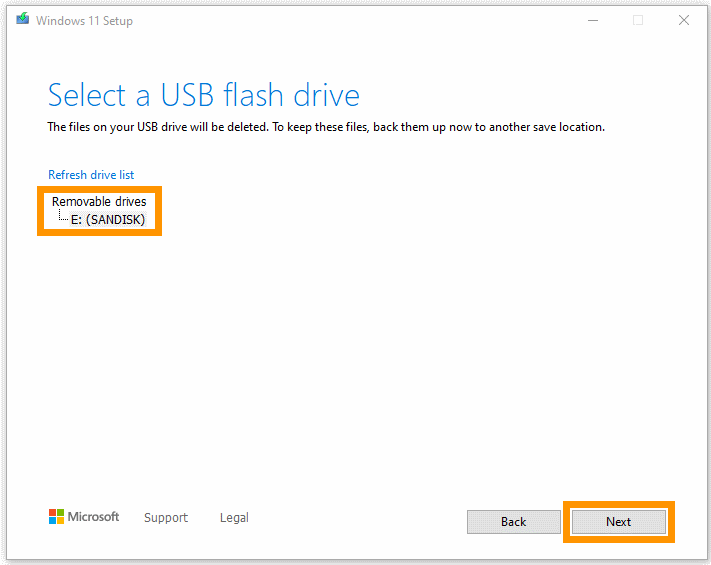
<figure><img src="https://3062424488-files.gitbook.io/~/files/v0/b/gitbook-x-prod.appspot.com/o/spaces%2FlLHqs7kbNoKOFTwGOfH6%2Fuploads%2Fgit-blob-cf81c89ad19d4fe72675e9973dcba72e27ad0db7%2F6f7f549af8dd9c1f4db5a1d19d43032b883bedeca578c1d8db48c81b2af65bd0.png?alt=media" alt="" width="563"><figcaption></figcaption></figure>

* Choose your flash drive from the list and click Next
* If the drive does not show, ensure it is formatted as FAT32 or try a different drive.

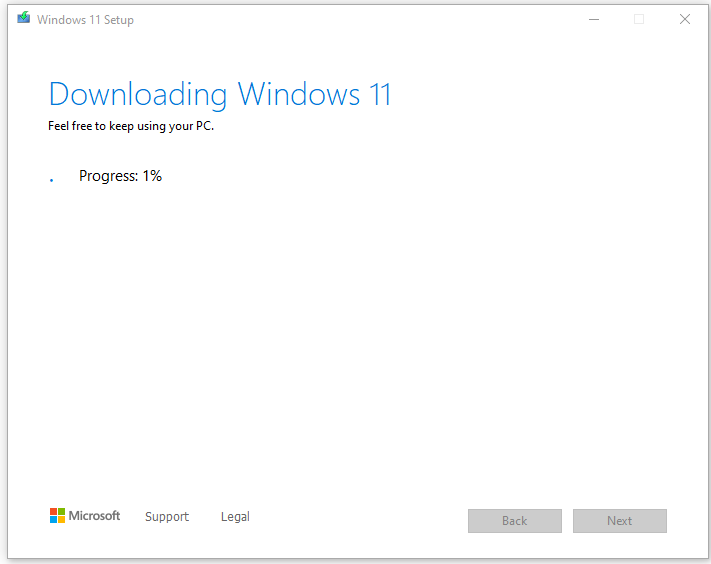
<figure><img src="https://3062424488-files.gitbook.io/~/files/v0/b/gitbook-x-prod.appspot.com/o/spaces%2FlLHqs7kbNoKOFTwGOfH6%2Fuploads%2Fgit-blob-3aad1584d55b210e3143099819340dc064eff5d9%2Fe4ced69000ff55b54324a88322bf5a9b63fa5edc6bce61ba3bdecb2f8a0e2228.png?alt=media" alt="" width="563"><figcaption></figcaption></figure>

* The Windows 11 installer will now download from the Internet and make the flash drive bootable. This will take several minutes depending on the speed of your flash drive and Internet connection.

<figure><img src="https://3062424488-files.gitbook.io/~/files/v0/b/gitbook-x-prod.appspot.com/o/spaces%2FlLHqs7kbNoKOFTwGOfH6%2Fuploads%2Fgit-blob-a2f4d72843fbac557eae84821df600c57ac47b14%2Ff34c2d6a135dc660c6c4d563026c54582726bc3724cbb1b77ea0849081e95250.png?alt=media" alt="" width="563"><figcaption></figcaption></figure>

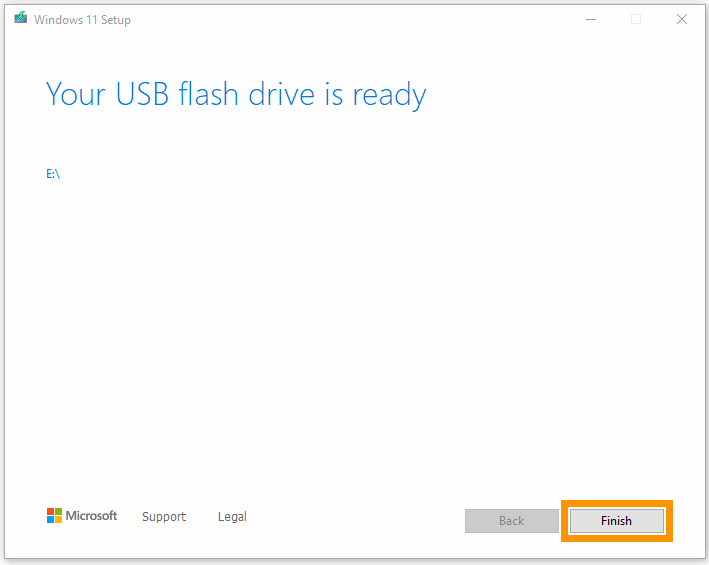
* When the tool finishes, click Finish to close it.

<figure><img src="https://3062424488-files.gitbook.io/~/files/v0/b/gitbook-x-prod.appspot.com/o/spaces%2FlLHqs7kbNoKOFTwGOfH6%2Fuploads%2Fgit-blob-8f3596d1c50fcd5a14ac65c111d7189b341f6f2d%2Fbadaa1d1ed5a970ee76bf39fd10af0d5144b2a1956d38eea55261f996b07b1e7.png?alt=media" alt="" height="122" width="256"><figcaption></figcaption></figure>

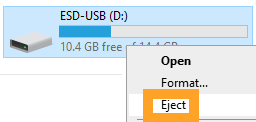
* Safely eject the flash drive and unplug it from the PC.

### <mark style="color:blue;">Installing Windows</mark> <a href="#installing-windows" id="installing-windows"></a>

<figure><img src="https://3062424488-files.gitbook.io/~/files/v0/b/gitbook-x-prod.appspot.com/o/spaces%2FlLHqs7kbNoKOFTwGOfH6%2Fuploads%2Fgit-blob-c6a46700163b196b3e49010b143aed4010b36161%2F52326fc9d7dcb39b7f3f310648442ce7669be34e3c44ae43f4cf7d574e7e44f9.png?alt=media" alt="" width="563"><figcaption></figcaption></figure>

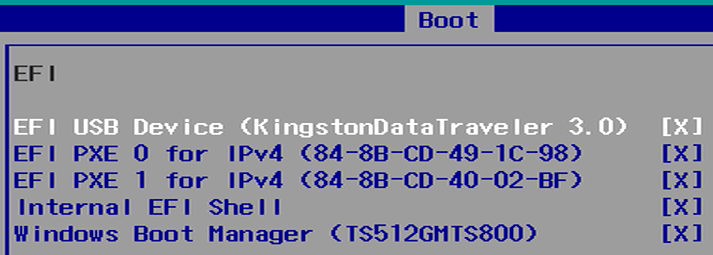
* Connect your newly created flash drive to the OnLogic PC and boot to it.
* Press F2 or Delete to access the BIOS. Under the Boot tab, make it the first boot device.
* Exact boot instructions vary by model. If you need assistance, contact <support@onlogic.com>.

<figure><img src="https://3062424488-files.gitbook.io/~/files/v0/b/gitbook-x-prod.appspot.com/o/spaces%2FlLHqs7kbNoKOFTwGOfH6%2Fuploads%2Fgit-blob-f5a7629016338a18d34675362d400bb4798039d4%2Fa67792a51fb2b470dd074bf156f55c435bc2887fb22ec9dbbb343d2aa321fc7a.png?alt=media" alt="" width="563"><figcaption></figcaption></figure>

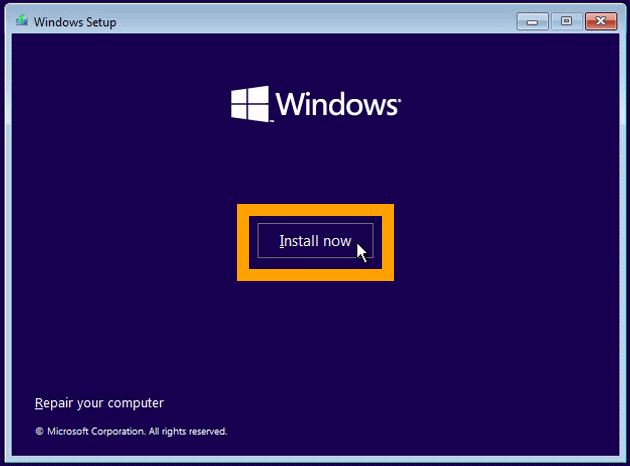
* When the flash drive boots, you will be presented with this screen.
* Click Install now

<figure><img src="https://3062424488-files.gitbook.io/~/files/v0/b/gitbook-x-prod.appspot.com/o/spaces%2FlLHqs7kbNoKOFTwGOfH6%2Fuploads%2Fgit-blob-f887320123b71e1d0435a96fdbe5eeeaed549f53%2F4856f86d633fe43ff630e9edf653772b1bc057f02b72b39fe0d865a3a99b7c37.png?alt=media" alt="" width="563"><figcaption></figcaption></figure>

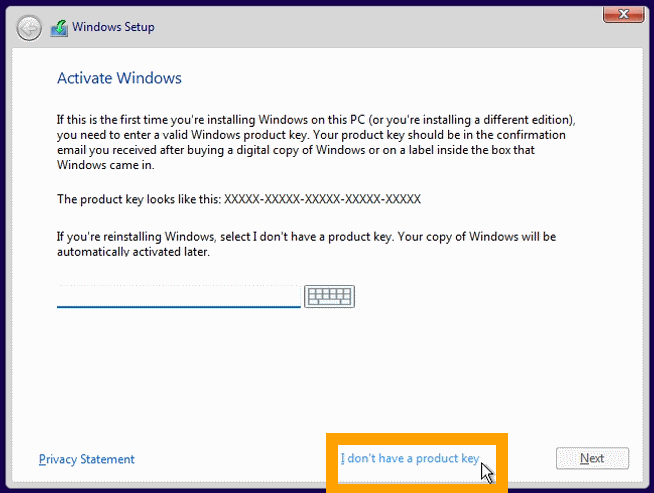
* Enter the product key from the bottom of your OnLogic PC and click Next.

<figure><img src="https://3062424488-files.gitbook.io/~/files/v0/b/gitbook-x-prod.appspot.com/o/spaces%2FlLHqs7kbNoKOFTwGOfH6%2Fuploads%2Fgit-blob-7ea241234cec1ad5ca1edb2a1639f2aaff83e4f4%2F08d99f5af02a93f6f5429f8a07851a9e66aa2d1baffd50126fb55c9bb3c656e1.png?alt=media" alt="" width="563"><figcaption></figcaption></figure>

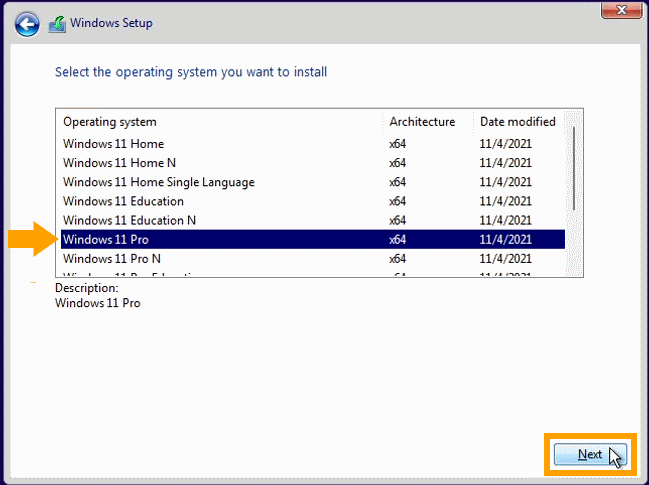
* If prompted (typically when you don’t enter a product key), select your version of Windows.

<figure><img src="https://3062424488-files.gitbook.io/~/files/v0/b/gitbook-x-prod.appspot.com/o/spaces%2FlLHqs7kbNoKOFTwGOfH6%2Fuploads%2Fgit-blob-3895464acf736142ff35e3ec4b5196f4759af147%2F06fb498190d6886c102b1d5426f1d0eda0465234045c57a4018747d39da55422.png?alt=media" alt="" width="563"><figcaption></figcaption></figure>

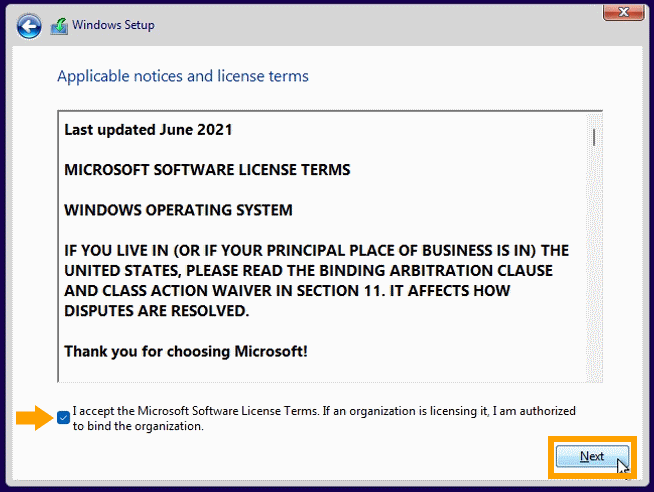
* Accept the license agreement and click Next

<figure><img src="https://3062424488-files.gitbook.io/~/files/v0/b/gitbook-x-prod.appspot.com/o/spaces%2FlLHqs7kbNoKOFTwGOfH6%2Fuploads%2Fgit-blob-f35a04f39a23fe1f2fb8a8574b3ea79b359808df%2Fe8eebb4fe1e34259d09703cfb13546b162bbc1c8c5969b90938f4a6a30027660.png?alt=media" alt="" width="563"><figcaption></figcaption></figure>

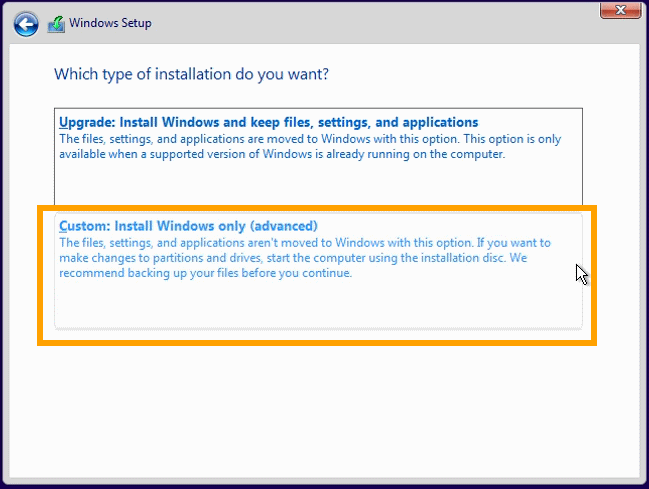
* Choose the option for Custom installation

<figure><img src="https://3062424488-files.gitbook.io/~/files/v0/b/gitbook-x-prod.appspot.com/o/spaces%2FlLHqs7kbNoKOFTwGOfH6%2Fuploads%2Fgit-blob-0220848cbd9f33174cc54b08eccaef5534da2008%2F2b1391a689b14346cd0df9b79bc448b7ac803c800beda8cff87b58e7e703bd4b.png?alt=media" alt="" width="563"><figcaption></figcaption></figure>

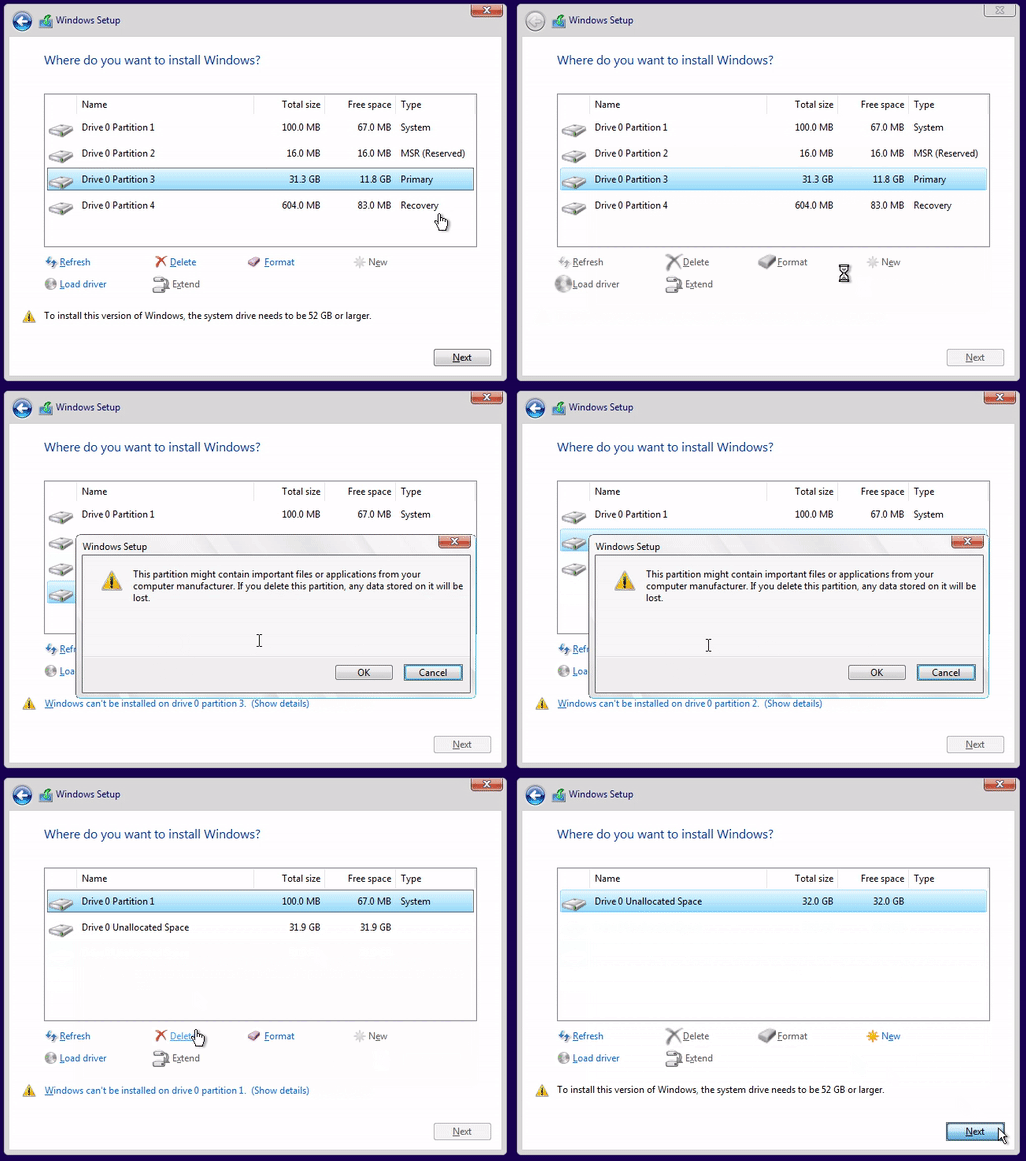
* Delete all partitions from the drive you will be installing Windows 11 to, typically Drive 0.

<figure><img src="https://3062424488-files.gitbook.io/~/files/v0/b/gitbook-x-prod.appspot.com/o/spaces%2FlLHqs7kbNoKOFTwGOfH6%2Fuploads%2Fgit-blob-74089f51431503acaf9f2372dcdabbdc1fe53a99%2F92963f97bf4eb5b14102214fd3ea17d2b9193c054f5659c3c3ecd3c131efaa16.png?alt=media" alt="" width="563"><figcaption></figcaption></figure>

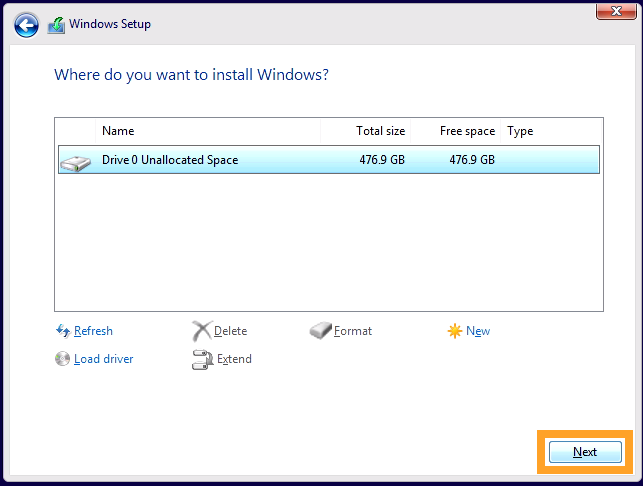
* With all partitions deleted, the Window should look like this. Click Next. New partitions will be created automatically.

<figure><img src="https://3062424488-files.gitbook.io/~/files/v0/b/gitbook-x-prod.appspot.com/o/spaces%2FlLHqs7kbNoKOFTwGOfH6%2Fuploads%2Fgit-blob-19cab19af9dc52f503c12d28b73e29108baa425f%2Fd7d259a9c7959bf8cf7d79407ec31bae95ab978b08a465618f6844f77c3c9fb8.png?alt=media" alt="" width="563"><figcaption></figcaption></figure>

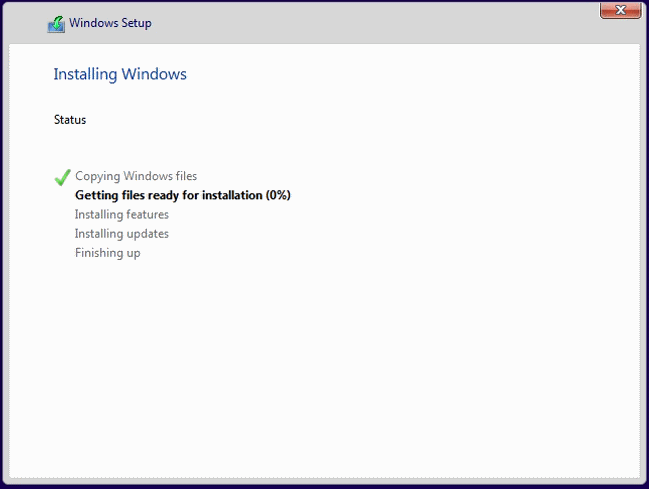
* Take a break while the installation proceeds

<figure><img src="https://3062424488-files.gitbook.io/~/files/v0/b/gitbook-x-prod.appspot.com/o/spaces%2FlLHqs7kbNoKOFTwGOfH6%2Fuploads%2Fgit-blob-979ef4912f4d288a8a7fc4a980ca34439ffa1781%2F424311d175a1a9bfac41e84b0127e3f7eeb80731a40192cf54cbfff6e238bf02.png?alt=media" alt="" width="563"><figcaption></figcaption></figure>

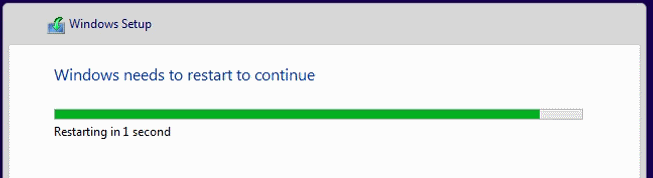
* After a few minutes, the installation will complete and the PC will reboot.

### <mark style="color:blue;">First Boot & Setup</mark> <a href="#first-boot-setup" id="first-boot-setup"></a>

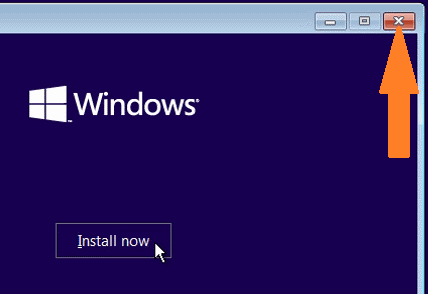
<figure><img src="https://3062424488-files.gitbook.io/~/files/v0/b/gitbook-x-prod.appspot.com/o/spaces%2FlLHqs7kbNoKOFTwGOfH6%2Fuploads%2Fgit-blob-fd552a45ba39885932c79b3c971adb56884d095e%2F5a5a87514df830db97183d7bd05ae9754c2233849ded973be3e77cd2153ded5d.png?alt=media" alt="" width="563"><figcaption></figcaption></figure>

* Depending on the boot settings, the system may boot to the flash drive again. If that happens, click the X to reboot and immediately remove the flash drive.

<figure><img src="https://3062424488-files.gitbook.io/~/files/v0/b/gitbook-x-prod.appspot.com/o/spaces%2FlLHqs7kbNoKOFTwGOfH6%2Fuploads%2Fgit-blob-a12d46f3fc5f34be2fba94b54afdc30353af79be%2Fe741ff37fa42e1d3744e96b98f6e36d14a212ea6b177a5cb839159d106e93cc0.png?alt=media" alt="" width="563"><figcaption></figcaption></figure>

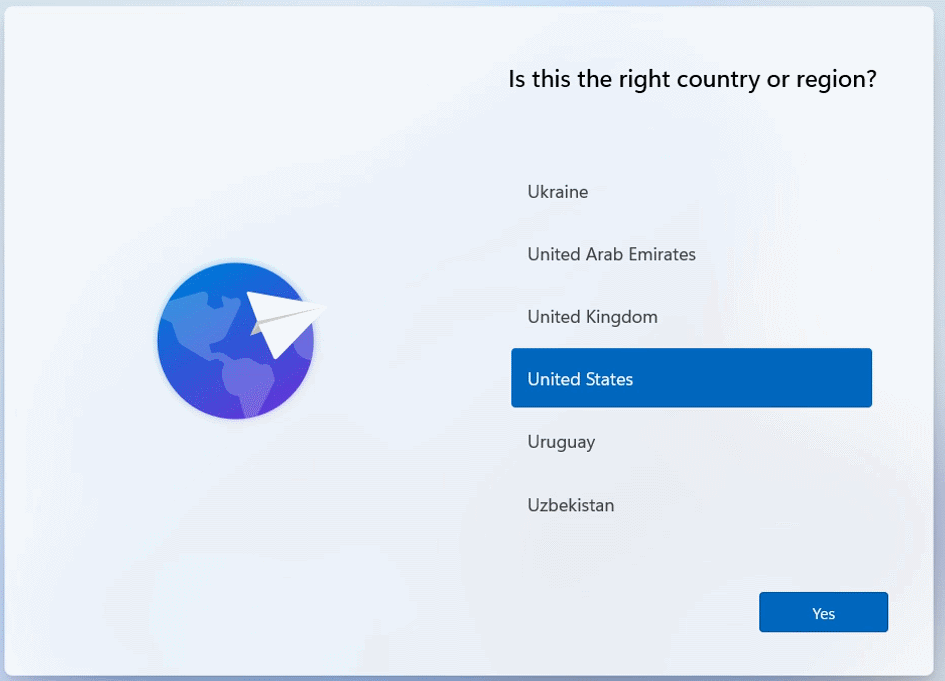
* When booting to your new Windows installation for the first time, you will be presented with this screen
* Confirm your region and click “Yes”

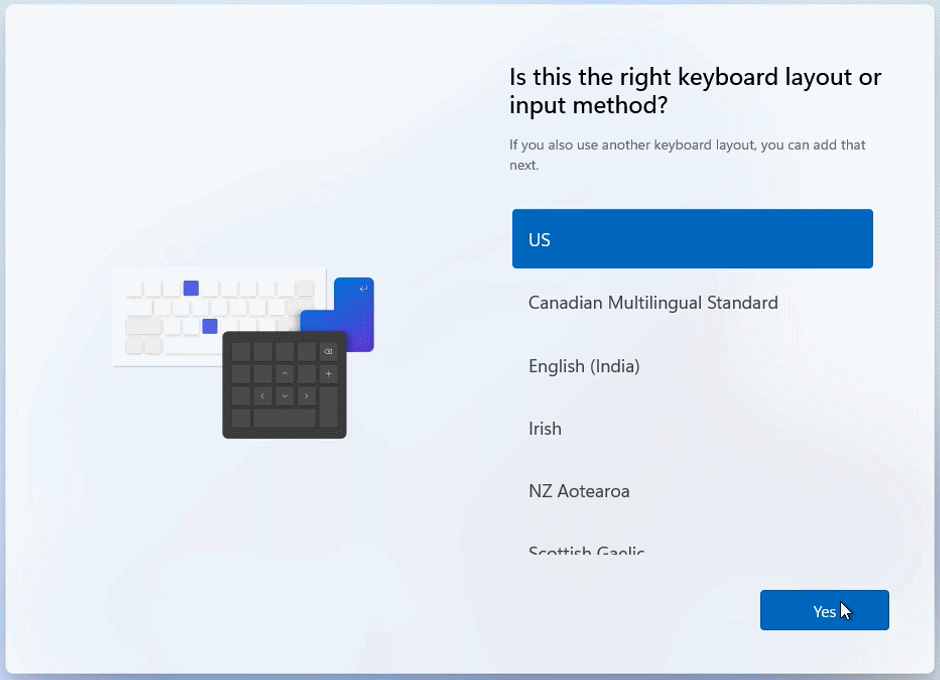
<figure><img src="https://3062424488-files.gitbook.io/~/files/v0/b/gitbook-x-prod.appspot.com/o/spaces%2FlLHqs7kbNoKOFTwGOfH6%2Fuploads%2Fgit-blob-3de6667f4712e9090867b66131dc55f3c10f3446%2F5cd4282758140bd414acb238b68b2aa242430c63aacdd8ed97767febf1f8d17c.png?alt=media" alt="" width="563"><figcaption></figcaption></figure>

* Confirm your keyboard layout and click “Yes”

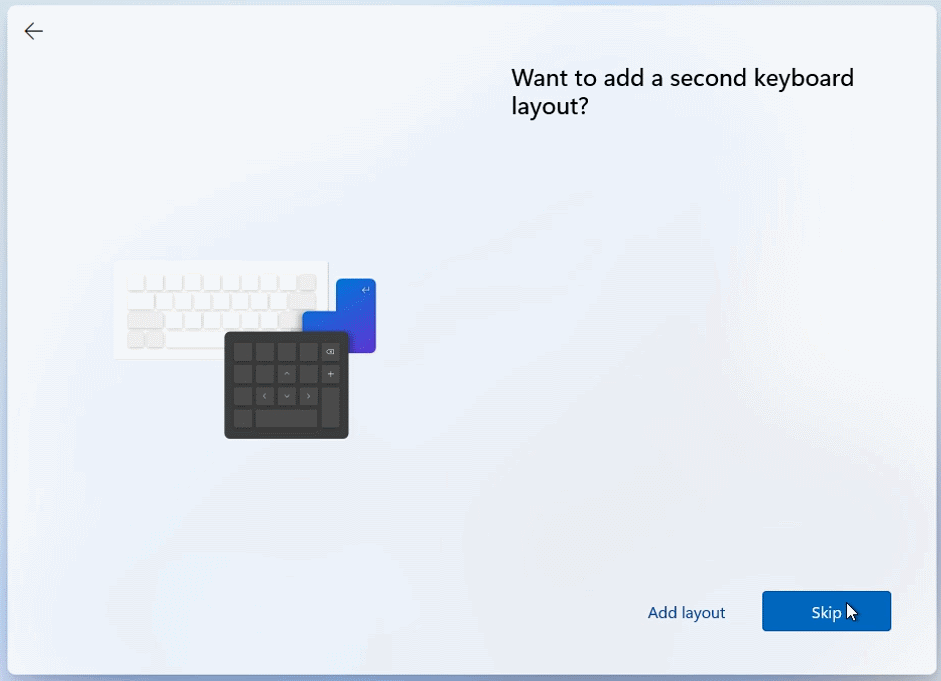
<figure><img src="https://3062424488-files.gitbook.io/~/files/v0/b/gitbook-x-prod.appspot.com/o/spaces%2FlLHqs7kbNoKOFTwGOfH6%2Fuploads%2Fgit-blob-fe6b43d279b59123e2ccbbaadf234bdb2c2af674%2F55b17775f43d18dbef95f0c06cf0e8288481aa06ecc03a839726b24d5dc5c061.png?alt=media" alt="" width="563"><figcaption></figcaption></figure>

* Click “Skip”

<figure><img src="https://3062424488-files.gitbook.io/~/files/v0/b/gitbook-x-prod.appspot.com/o/spaces%2FlLHqs7kbNoKOFTwGOfH6%2Fuploads%2Fgit-blob-0441fde5e29bbe3cd9d7581a62e37c26a5ffac45%2F1d0f4a6348cb99ed62084074d09b818a158e465898d9559d2ec3857d60d6f95b.png?alt=media" alt="" width="563"><figcaption></figcaption></figure>

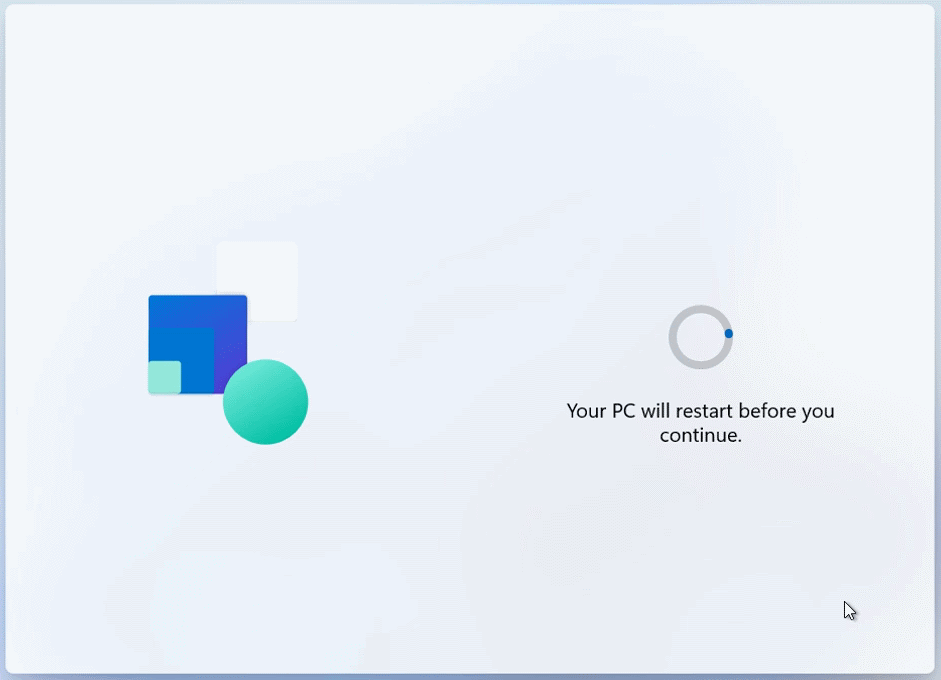
* The PC may restart once more at this stage.

<figure><img src="https://3062424488-files.gitbook.io/~/files/v0/b/gitbook-x-prod.appspot.com/o/spaces%2FlLHqs7kbNoKOFTwGOfH6%2Fuploads%2Fgit-blob-979b6aa15dd851f30ca20d2097780ebe2c08b1d4%2F4a48b694ca6001057ce4c4efb7851ecad244dbda9d6400d20582454d09530aa7.png?alt=media" alt="" width="563"><figcaption></figcaption></figure>

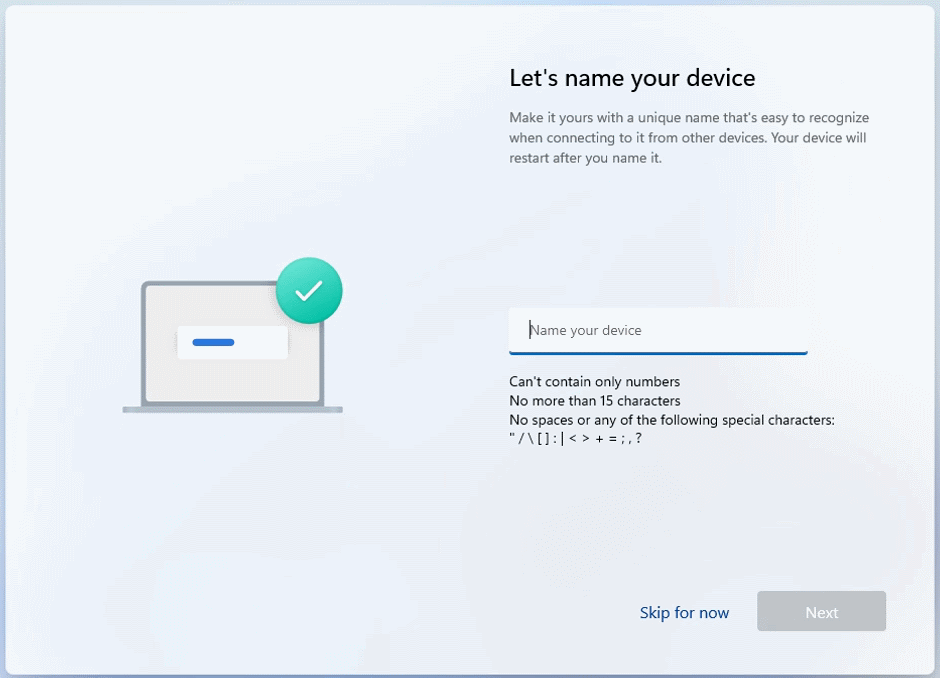
* Provide a computer name or choose “skip for now” to automatically assign one. This mostly matters for networking.

<figure><img src="https://3062424488-files.gitbook.io/~/files/v0/b/gitbook-x-prod.appspot.com/o/spaces%2FlLHqs7kbNoKOFTwGOfH6%2Fuploads%2Fgit-blob-0b45f3052741b39376f5d97b240e558d05215b3e%2F0cb0eb2549de2dad0200a5d69a719571b88a8262ef12b1e92bf09937a550ddd5.png?alt=media" alt="" width="563"><figcaption></figcaption></figure>

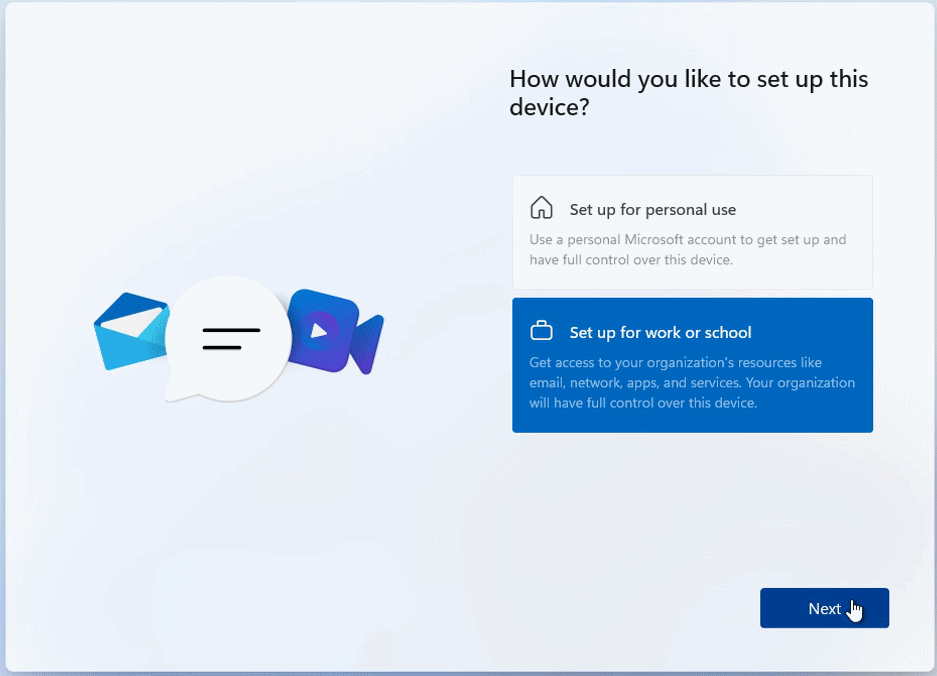
* Choose “Set up for work or school”. This will allow you to avoid needing a Microsoft account.

<figure><img src="https://3062424488-files.gitbook.io/~/files/v0/b/gitbook-x-prod.appspot.com/o/spaces%2FlLHqs7kbNoKOFTwGOfH6%2Fuploads%2Fgit-blob-1ddc49171de4acd475e86f59505e119879b732d0%2F08dbc5b8ffecfd7c3abe24fd7bac62a011751dd44467c8d5bb009ac4e242aad6.png?alt=media" alt="" width="563"><figcaption></figcaption></figure>

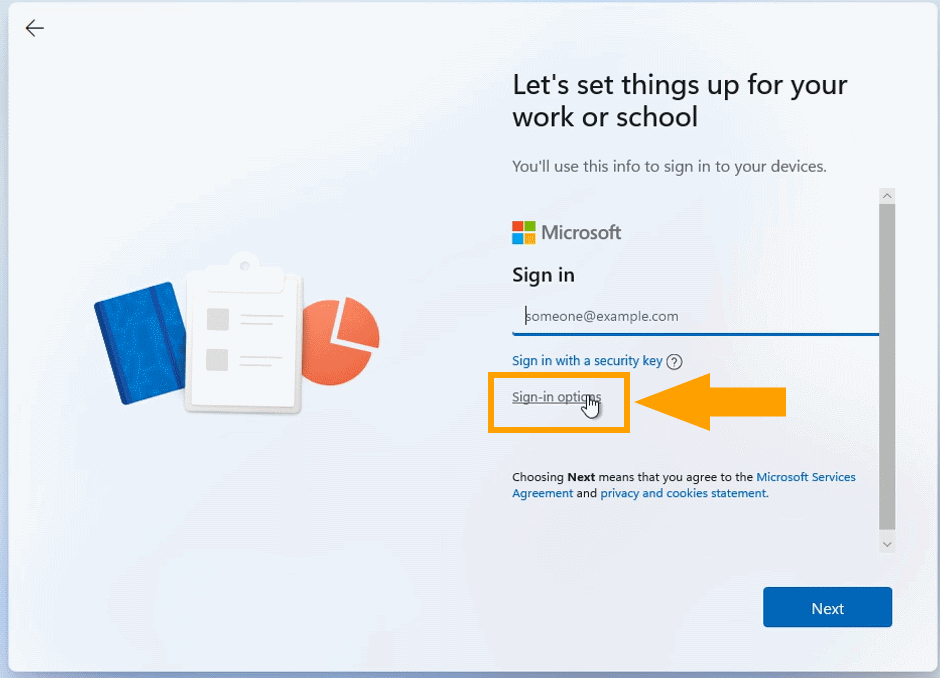
* You may log in with your Microsoft account if desired.
* In many business use cases, that is not desired. You can create a normal account with the “Sign-in options” button.

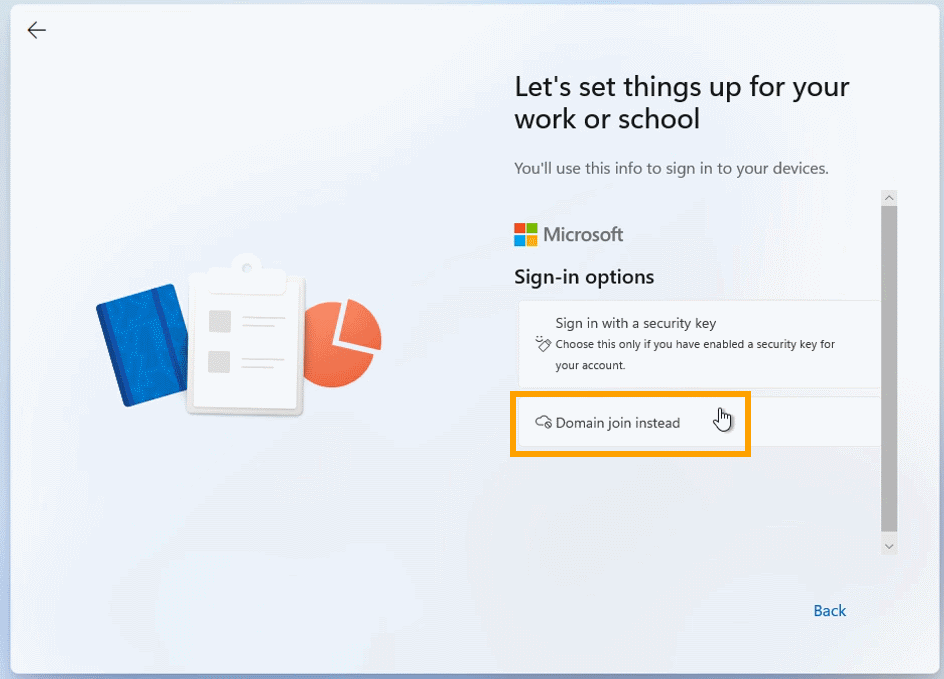
<figure><img src="https://3062424488-files.gitbook.io/~/files/v0/b/gitbook-x-prod.appspot.com/o/spaces%2FlLHqs7kbNoKOFTwGOfH6%2Fuploads%2Fgit-blob-7c64067d730720a03fdfbc08dc775255e84332b7%2F476a960d1779f606a542426cc258d05e2d5ad80854ebaf03c7242a9a570aa0ce.png?alt=media" alt="" width="563"><figcaption></figcaption></figure>

* Choose “Domain join instead”

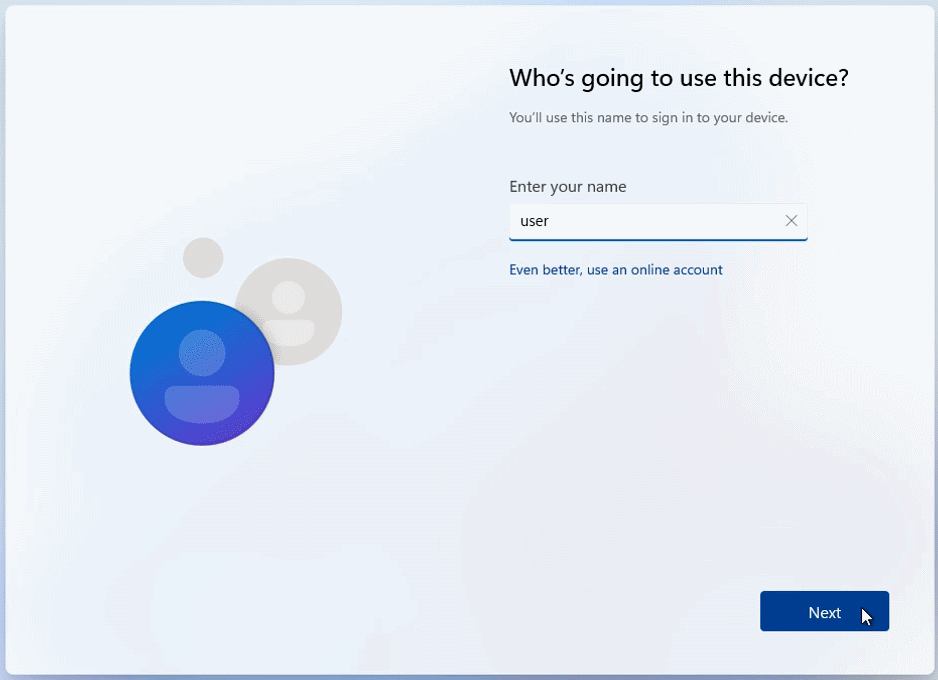
<figure><img src="https://3062424488-files.gitbook.io/~/files/v0/b/gitbook-x-prod.appspot.com/o/spaces%2FlLHqs7kbNoKOFTwGOfH6%2Fuploads%2Fgit-blob-681dd106c08896d289bcbccfa1175814a76fd65e%2Fef0acebf278188a1ca27a372bd85eb6128169f06a8be9382489b6c3a49d7eea9.png?alt=media" alt="" width="563"><figcaption></figcaption></figure>

* Enter a username and click next.

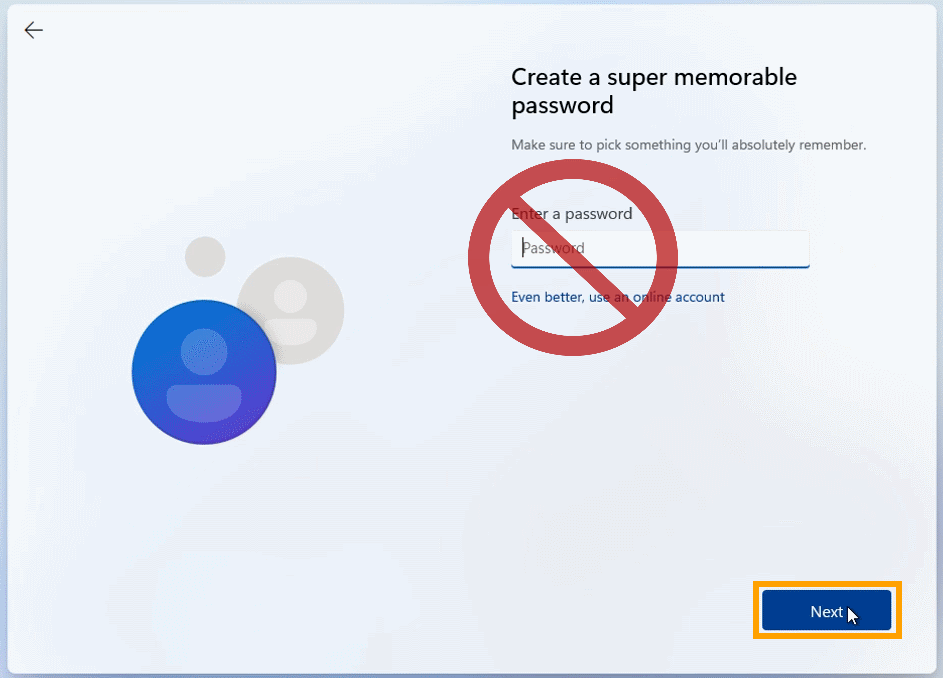
<figure><img src="https://3062424488-files.gitbook.io/~/files/v0/b/gitbook-x-prod.appspot.com/o/spaces%2FlLHqs7kbNoKOFTwGOfH6%2Fuploads%2Fgit-blob-4aa81aa7d312f2631d654d967ade0c849e6c2cd1%2Fd1e4a57fb150f2947455f675936571e95b97ddace85b5f1b66e1fea3fd91aa6c.png?alt=media" alt="" width="563"><figcaption></figcaption></figure>

* DO NOT set a password yet. Click Next.
* This will help avoid additional nag screens.

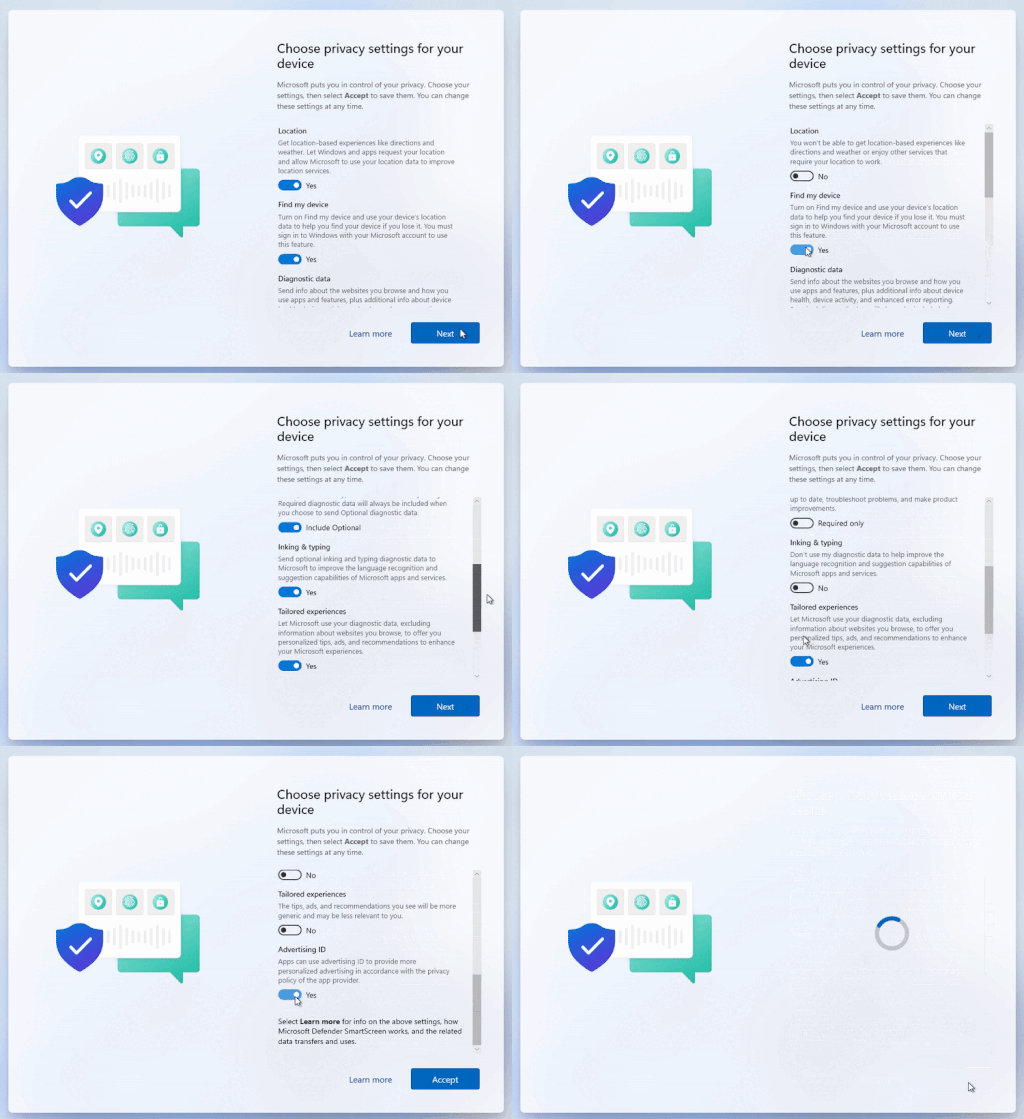
<figure><img src="https://3062424488-files.gitbook.io/~/files/v0/b/gitbook-x-prod.appspot.com/o/spaces%2FlLHqs7kbNoKOFTwGOfH6%2Fuploads%2Fgit-blob-5fbff36563e0ee3311e8ec8bd37c029a62822819%2F7c33f191119efac1c9b722e7f318a38c28e4856700f2a5e63d647b06928a3ccd.png?alt=media" alt="" width="563"><figcaption></figcaption></figure>

* Disable all of the options at the next screen. This helps enhance system security, especially if “modern” apps from the Microsoft Store will not be used. They can be enabled later if needed.

<figure><img src="https://3062424488-files.gitbook.io/~/files/v0/b/gitbook-x-prod.appspot.com/o/spaces%2FlLHqs7kbNoKOFTwGOfH6%2Fuploads%2Fgit-blob-dc694bdff74c56e54f0db2a9b76ec1d686ee0698%2Fea15f9ea84bead76f68c457117c9bb2049f6585fe99c053036d48b0d184795f5.png?alt=media" alt="" width="563"><figcaption></figcaption></figure>

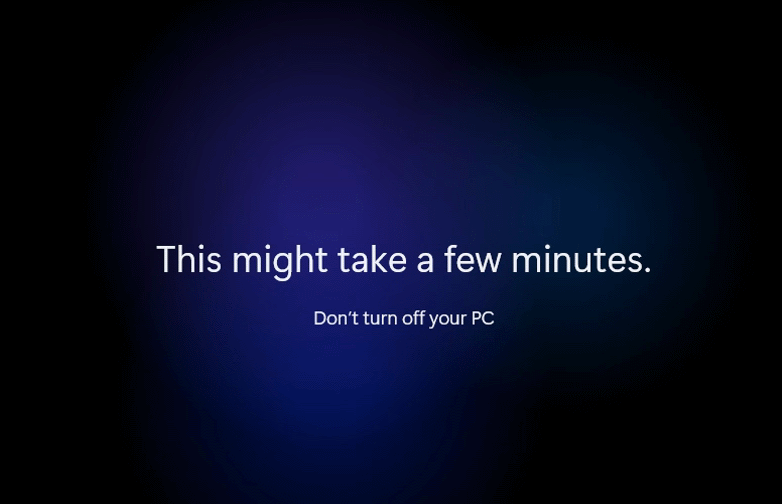
* This loading screen will appear for a few minutes while the user settings are applied.

<figure><img src="https://3062424488-files.gitbook.io/~/files/v0/b/gitbook-x-prod.appspot.com/o/spaces%2FlLHqs7kbNoKOFTwGOfH6%2Fuploads%2Fgit-blob-44daf9b7a9a7e5aad523947813d68364fa12d248%2F03fa1a9e005d1b447980a119bcad0bc33f665517b2ca988a1a26ca17c35c5cb8.png?alt=media" alt="" width="563"><figcaption></figcaption></figure>

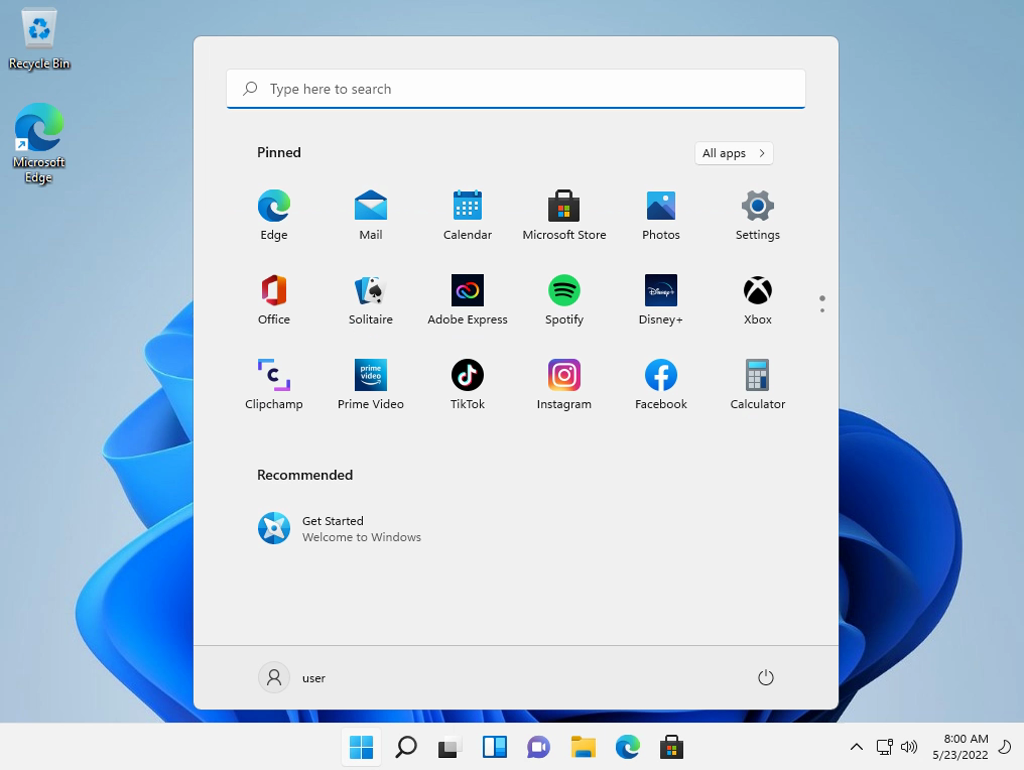
* When completed, you will go straight to the Windows 11 desktop.
* Your installation is complete!
* If you are missing any drivers, start by running Windows update. It tends to find most of them. Otherwise, use the search box at the top of this page to find the “Technical Resources” page for your model. It will have a link to the drivers.

### <mark style="color:blue;">Activating Windows</mark> <a href="#activating-windows" id="activating-windows"></a>

<figure><img src="https://3062424488-files.gitbook.io/~/files/v0/b/gitbook-x-prod.appspot.com/o/spaces%2FlLHqs7kbNoKOFTwGOfH6%2Fuploads%2Fgit-blob-3e9450eecf0459e7ee926e16f355c79817cbf61a%2F784a388603d5a82584a1ce5519e70544bc5ba4a80f886fee745b65c2ab0e0057.png?alt=media" alt="" width="563"><figcaption></figcaption></figure>

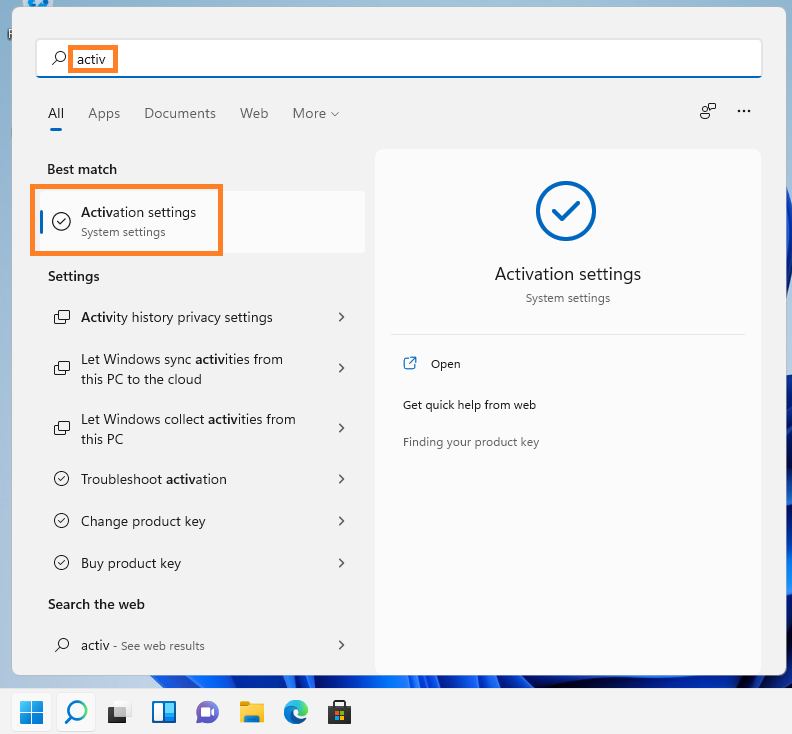
* Open the start menu and search for “**Activation**“
* The activation settings option will come up. Click on it.

<figure><img src="https://3062424488-files.gitbook.io/~/files/v0/b/gitbook-x-prod.appspot.com/o/spaces%2FlLHqs7kbNoKOFTwGOfH6%2Fuploads%2Fgit-blob-f87da5295e476158537349e27834ce18ca65786e%2F7de86554e73a5e3f2afe91b5c0edfc2423f6216da29c28cf4e4e7422a5ee687d.png?alt=media" alt="" width="563"><figcaption></figcaption></figure>

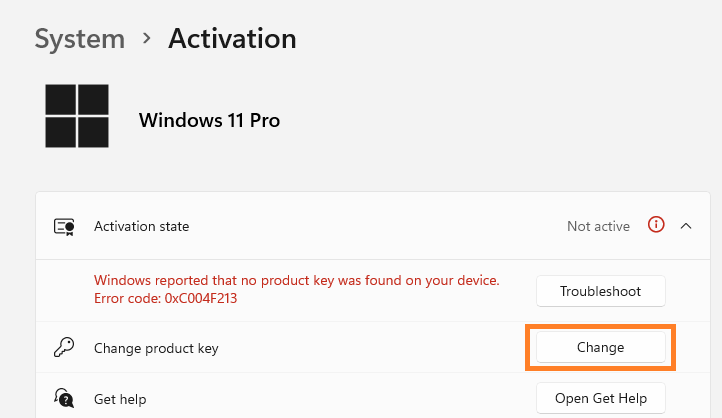
* The activation state is shown
* Click the “Change” button

<figure><img src="https://3062424488-files.gitbook.io/~/files/v0/b/gitbook-x-prod.appspot.com/o/spaces%2FlLHqs7kbNoKOFTwGOfH6%2Fuploads%2Fgit-blob-6b4c804f7cfe0bcba154b62020ca75b8620d6596%2F8eac5e53e4d32db38dba01583f1ee54b5830228a87918b0241b44b23d16c761f.png?alt=media" alt="" width="563"><figcaption></figcaption></figure>

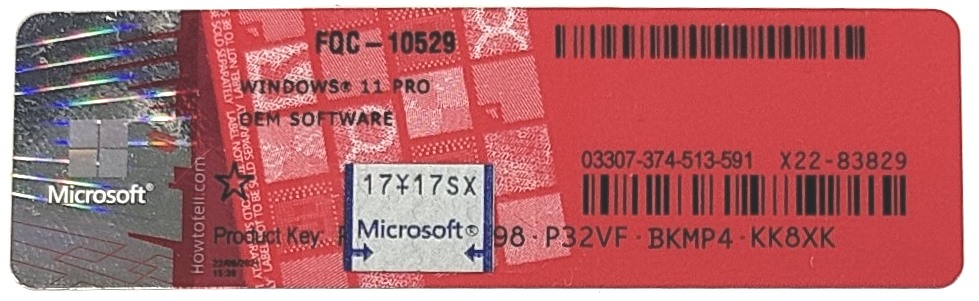
* Enter the product key from the bottom of your OnLogic PC.
* The key may be obscured by a square patch of silver security foil.
* Very gently, scratch the foil off with your fingernail as you would a lottery ticket. The key is underneath.

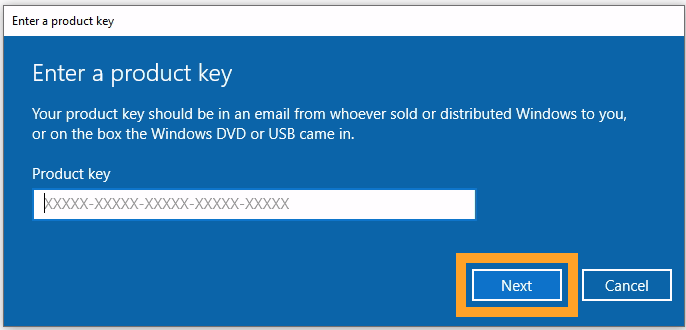
<figure><img src="https://3062424488-files.gitbook.io/~/files/v0/b/gitbook-x-prod.appspot.com/o/spaces%2FlLHqs7kbNoKOFTwGOfH6%2Fuploads%2Fgit-blob-709baff3efe0938a7cccd3c70fa1de1040180540%2Fdf92a18a79742fdf8cda21216a56993b0fbb490ca03568765e8a9d53b4dc6246.png?alt=media" alt="" width="563"><figcaption></figcaption></figure>

* Enter the product key in this window, press Next, and Windows will activate online automatically.

### <mark style="color:blue;">Optional Tweaks</mark> <a href="#optional-tweaks" id="optional-tweaks"></a>

#### Left Align the Start Menu <a href="#left-align-the-start-menu" id="left-align-the-start-menu"></a>

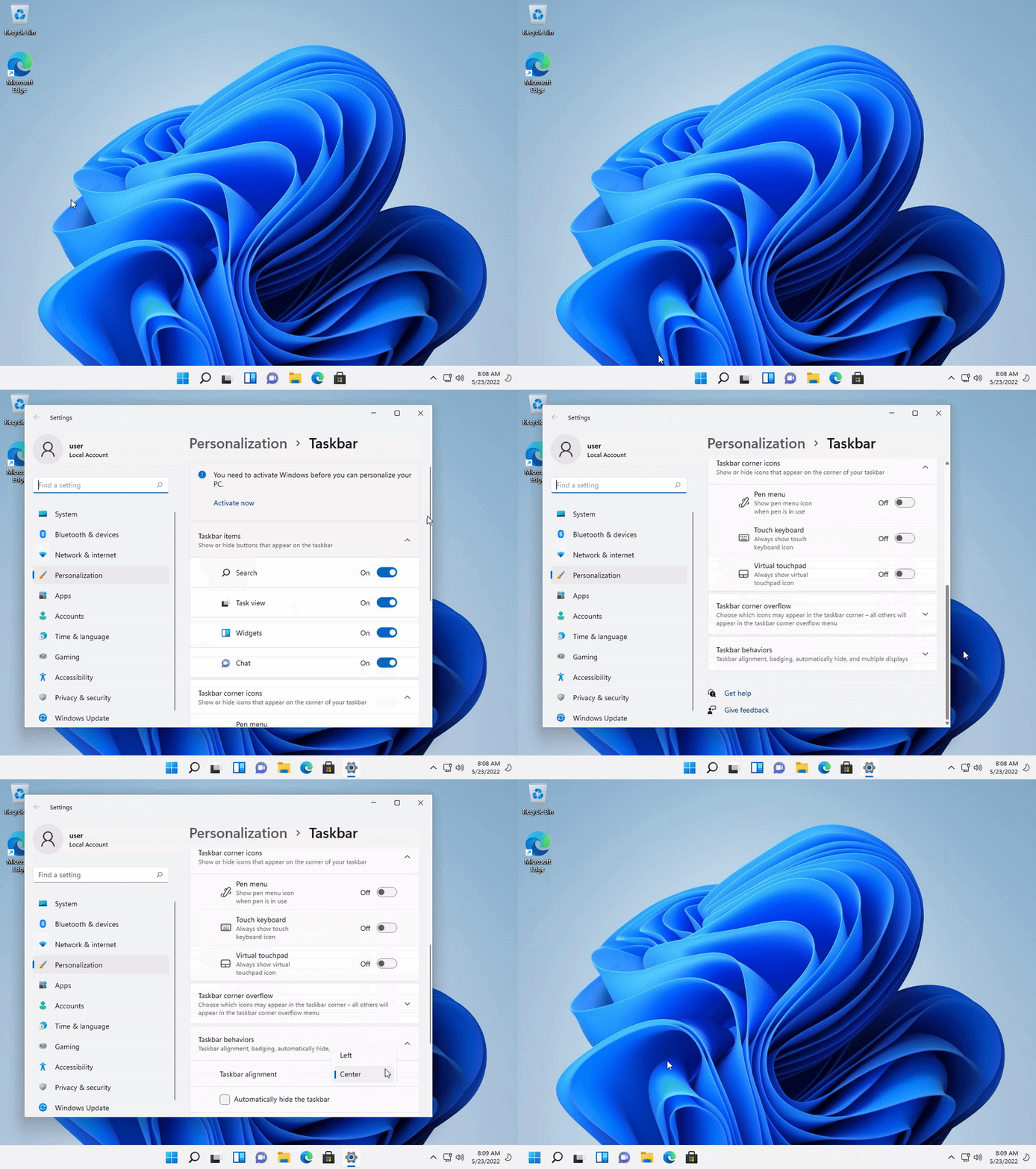
Windows 11 moved the taskbar icons to the middle, which is not ideal for experienced Windows users. Fortunately, this is easy to change back.

* Right click on the taskbar and choose “Taskbar Settings.
* Scroll down and click on “Taskbar Behaviors”
* Change “Taskbar Alignment” to “Left”

<figure><img src="https://3062424488-files.gitbook.io/~/files/v0/b/gitbook-x-prod.appspot.com/o/spaces%2FlLHqs7kbNoKOFTwGOfH6%2Fuploads%2Fgit-blob-68348f2cf9e4177656e5daf21038604881d02fed%2F6c53162b743f22a2764e68f155ec7e0ee263764e1f5f4f08a696533c5602eed0.png?alt=media" alt="" width="563"><figcaption></figcaption></figure>

#### Remove Preinstalled Apps <a href="#remove-preinstalled-apps" id="remove-preinstalled-apps"></a>

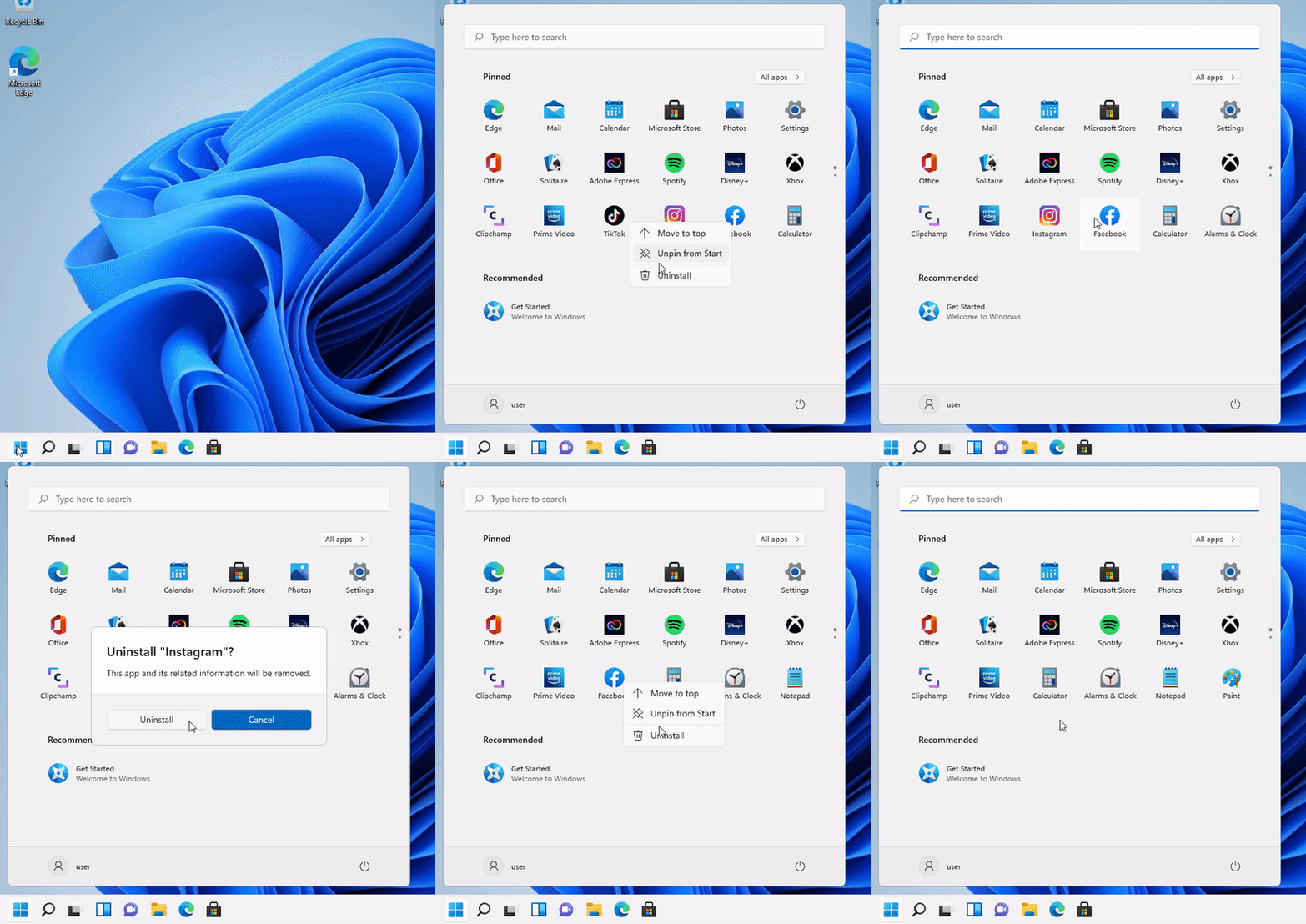
The Windows 11 Pro start menu includes a few suggested apps from the Microsoft store. These recommendations are geared towards consumers and may not be wanted on a business machine. Right click on each undesired app and choose “uninstall”.

<figure><img src="https://3062424488-files.gitbook.io/~/files/v0/b/gitbook-x-prod.appspot.com/o/spaces%2FlLHqs7kbNoKOFTwGOfH6%2Fuploads%2Fgit-blob-d41a7ff094c8c73470814f934cac877c76db3035%2F7bb11e2436f499d51ac01826cd484da16b8b236cbd11603ca35d1174ce797dc4.png?alt=media" alt="" width="563"><figcaption></figcaption></figure>